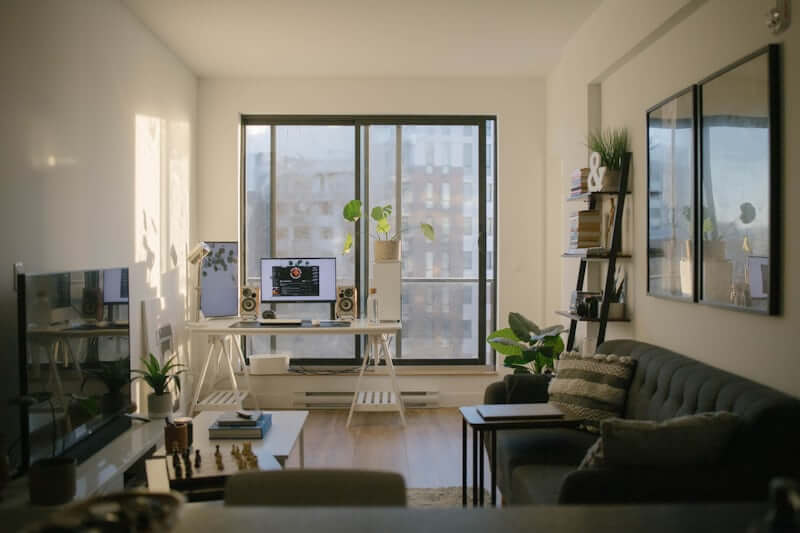
Small space design tricks get pinned constantly — but a lot of them assume you’re starting from a blank, freshly renovated room. If you’re working with a tiny rental, a railroad apartment, or a room that just feels tight no matter how you arrange it, this list is for you.
The truth is, square footage isn’t the whole story. How a room looks and feels has just as much to do with light, color, and what your eye is drawn to first — and almost none of that requires knocking down a wall.
These 20 small space design tricks are simple, budget-friendly, and built for real apartments — not a staged photo shoot. Pick a few, try them this weekend, and watch the room open up without anything actually changing size.
Explore More Cozy Inspiration: Cozy Living Room Decor | Cozy Bedroom Decor
Table of Contents
Why Small Rooms Feel Small — and How to Fix It
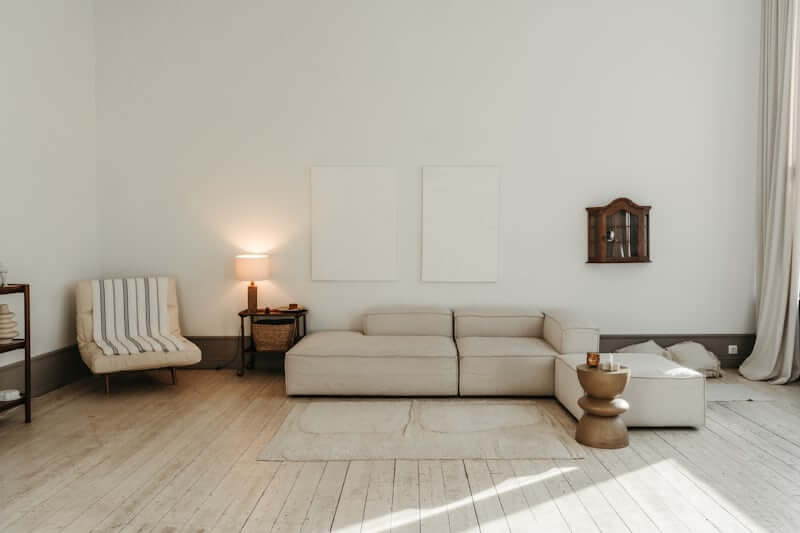
Before the list — a cramped feeling usually comes down to three things, not the actual dimensions of the room:
- Visual clutter — too many objects competing for attention at once
- Low or blocked light — a room that feels dim will always feel smaller
- Heavy, low furniture — pieces that sit close to the floor and crowd the walking path
These 20 small space design tricks are grouped around fixing exactly those three things — plus a few finishing touches that pull it all together.
Lighting & Color
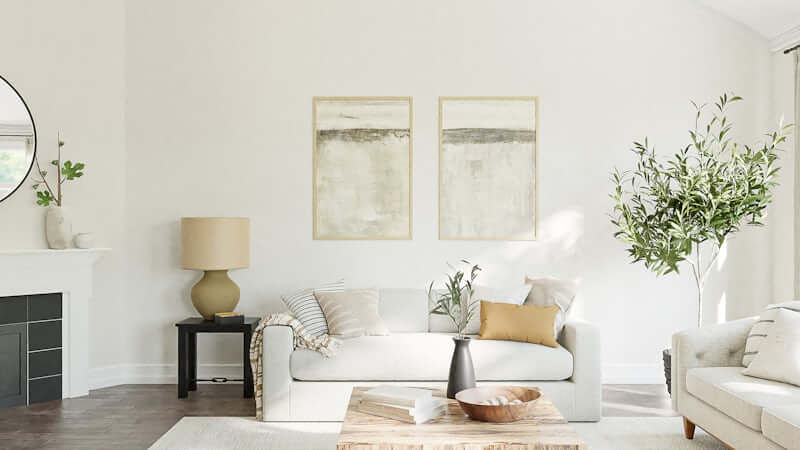
Light and color are the fastest small space design tricks you can use — they cost the least and change how the whole room feels almost instantly.
1. Stick to One Light, Bright Wall Color
Dark or busy wall colors absorb light and visually shrink a room, how color affects how big a room feels big a room feels. A soft white, warm cream, or light neutral reflects more light around the space, making the walls feel like they’re pushing outward instead of closing in.
2. Layer in as Much Natural Light as Possible
Avoid heavy curtains or furniture blocking windows, one of the simplest small space design tricks for daylight. Sheer or lightweight curtains let daylight spread further into the room, which does more to open up a small space than almost any other single change.
If privacy is a concern, sheer curtains paired with a blackout liner give you both light and privacy without bulk.
3. Add Light From Multiple Low Sources
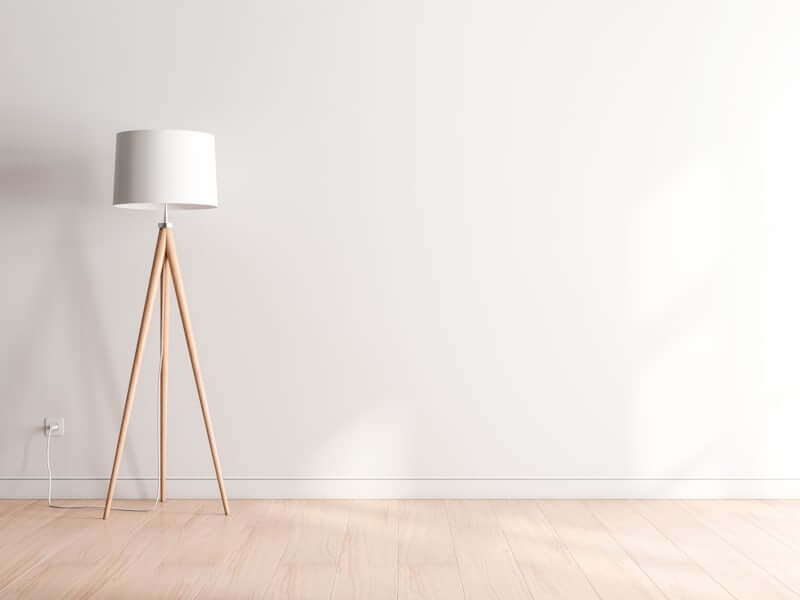
A single harsh overhead light flattens a room and makes corners feel darker and smaller by contrast. A floor lamp, a table lamp, and a wall sconce spread light more evenly and make the whole space feel larger and softer.
4. Keep Your Color Palette Consistent Wall-to-Floor
When walls, floors, and large furniture pieces are close in tone, the eye doesn’t catch on hard transitions — which makes the whole room read as one continuous, larger space rather than a series of small, separate zones.
Furniture & Layout Tricks
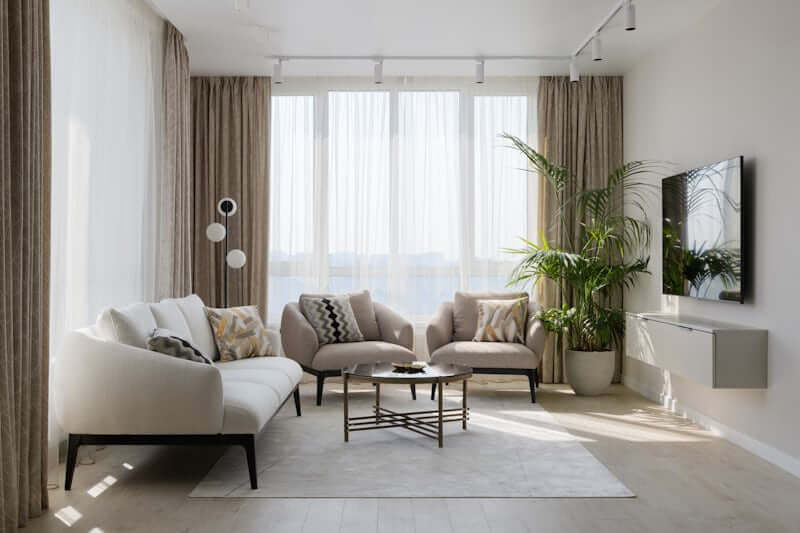
These small space design tricks are about how furniture sits in the room — scale, placement, and the paths your eye and your feet actually travel.
5. Choose Furniture with Visible Legs
Furniture that sits flush to the floor blocks sightlines and makes a room feel heavier. Pieces with raised, visible legs let light and floor space show underneath, which tricks the eye into reading the room as more Open. These small space design tricks focus on placement and scale.
6. Float Furniture Away From the Walls — Just a Little
Pushing every piece flush against the wall can actually make a room feel smaller, not bigger. Pulling a sofa or bed even a few inches off the wall creates a sense of depth and flow that a flat, wall-hugging layout doesn’t is a favorite small space design tricks move among stagers
This works best in rooms with at least a little square footage to spare — in very tight spaces, walls-only placement may still be necessary.
7. Scale Furniture to the Room, Not the Other Way Around
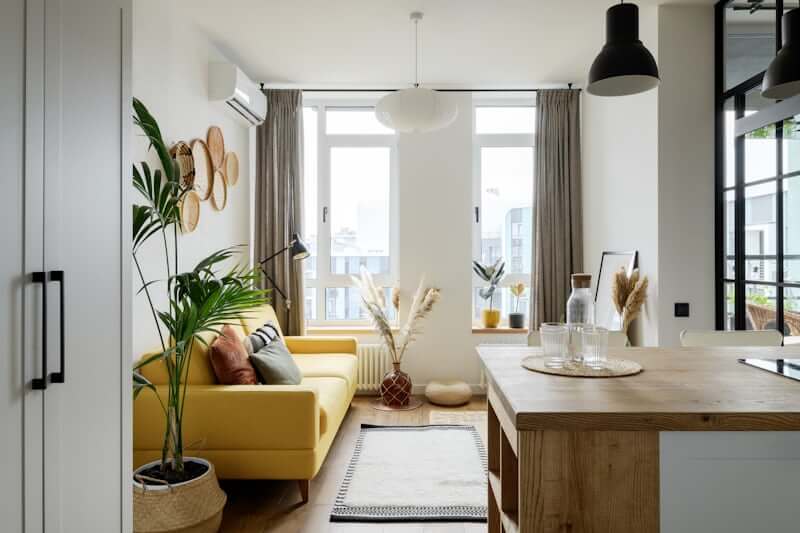
One oversized sofa or bed frame can dominate a small room and make everything around it feel cramped. Choosing appropriately scaled pieces — even if that means a loveseat instead of a full sofa — leaves breathing room that makes the whole space feel bigger.
8. Keep a Clear Walking Path
A room where you have to angle around furniture to move through it will always feel smaller than its actual square footage. Mapping out one clear, unobstructed path through the room — even if it means rearranging — makes a noticeable difference.
Mirror & Visual Illusion Tricks
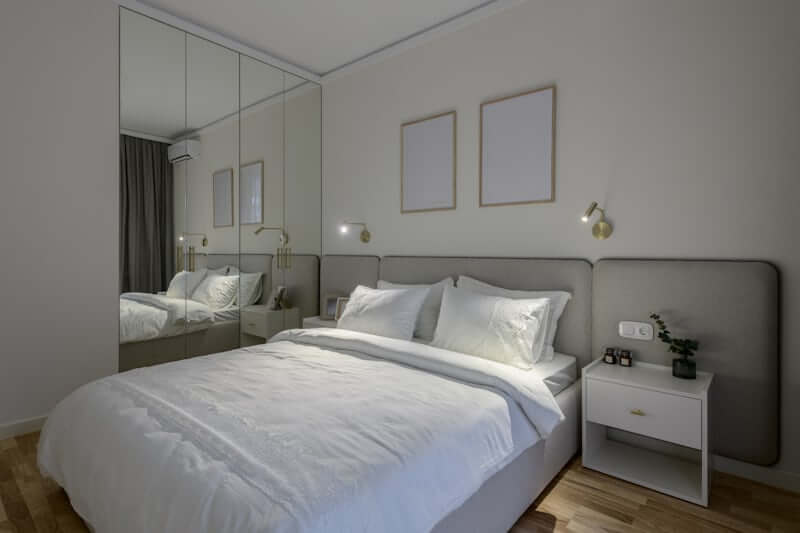
This group of small space design tricks plays with depth and reflection — classic interior design moves that genuinely change how big a room feels, even though nothing physically changes.
9. Add a Large Mirror Opposite a Window
A mirror placed across from a window reflects natural light back into the room and doubles the sense of depth. This is one of the most reliable small space design tricks in any designer’s toolkit.
Lean a large floor mirror against the wall if you can’t hang one — it works just as well and adds height too.
10. Use Vertical Stripes or Tall Decor to Draw the Eye Up
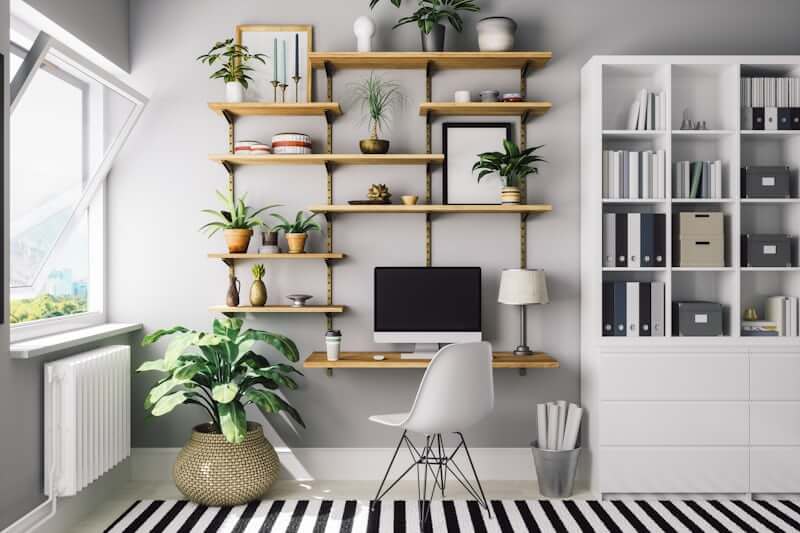
Anything that draws the eye upward — a tall bookshelf, a vertically striped rug, floor-to-ceiling curtains — makes the ceiling feel higher and the room feel taller, which reads as more spacious overall.
11. Choose a Rug That’s Slightly Too Big, Not Too Small
A rug that’s too small for the room it’s in makes the space look chopped up and smaller, one of the most overlooked small space design tricks. Sizing up — even slightly — visually extends the floor and makes the whole room feel more grounded and larger.
12. Keep Window Treatments Simple and Light
Heavy, dark, or patterned curtains can visually shrink a window and the wall around it. Simple, light-colored panels hung close to the ceiling create a cleaner sightline that makes the whole wall — and the room — feel bigger.
Storage & Clutter Tricks
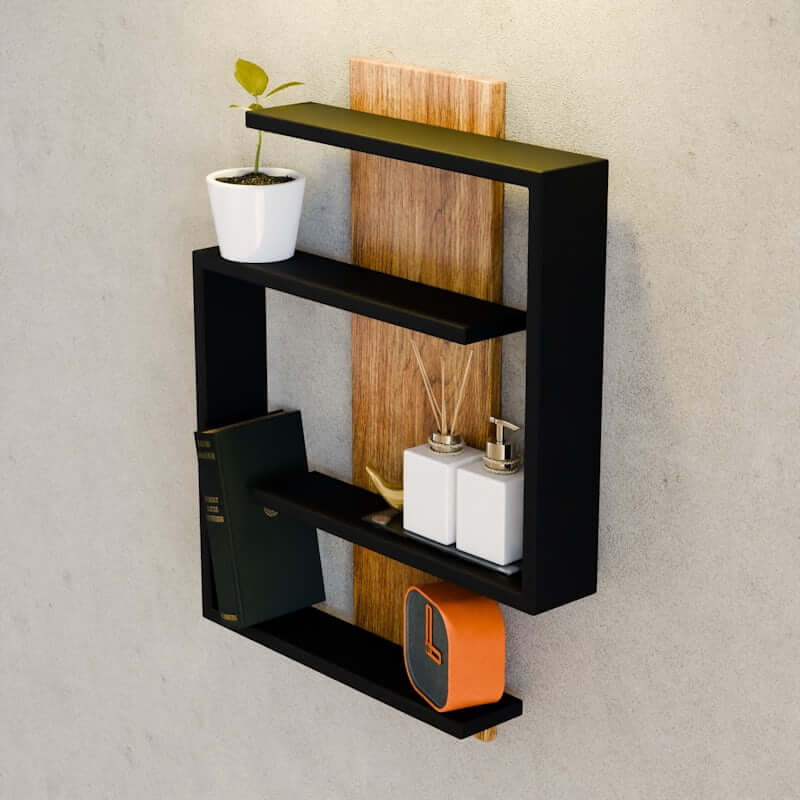
Clutter is one of the fastest ways to make a small room feel even smaller a small space design tricks hide mess without using floor space. These small space design tricks focus on storage that hides mess without taking up visual real estate.
13. Use Vertical Storage Instead of Floor Storage
Wall-mounted shelves, hooks, and tall narrow bookcases store just as much as floor units without eating into your walking space. Going vertical instead of wide is one of the most space-efficient small space design tricks available.
14. Choose Furniture That Doubles as Storage
A bed frame with drawers underneath, an ottoman that opens up, or a coffee table with a shelf all let you tuck clutter out of sight without adding another piece of furniture to the room.
15. Keep Surfaces 80% Clear
A counter, dresser, or desk covered edge-to-edge in items reads as cluttered no matter how small each item is. Leaving most of a surface empty — with just one or two intentional objects — makes the whole room feel calmer and larger.
16. Use Closed Storage for Everyday Clutter
Baskets, bins, and cabinets with doors hide daily mess far better than open shelving, which can quickly start to look like visual noise in a small room. Save open shelves for a few curated, pretty items only.
Styling & Finishing Touches
These last small space design tricks are about the final layer — the small details that make a room feel finished and intentional rather than just functional.
17. Repeat One Accent Color in Small Doses
Picking one accent color and repeating it in two or three small spots — a pillow, a vase, a piece of art — ties the room together visually, which reads as more spacious and considered than scattered, unrelated colors.
18. Hang Art and Shelves at Eye Level, Not Higher
Placing artwork too high to fill empty wall space can actually make ceilings feel lower and walls feel busier. Keeping art and shelving at a natural eye-level height keeps the room feeling proportional and calm.
19. Use Multi-Functional Pieces Wherever Possible
A nesting table that expands, a desk that folds away, or a bench that doubles as extra seating all let a small room serve more than one purpose without needing more furniture crammed in.
20. Finish With One Personal, Uncluttered Touch
A single plant, a favorite framed photo, or one meaningful object gives the room personality without adding visual weight. The goal isn’t an empty room — it’s a room that feels intentional, not crowded.
A small space that feels like you will always feel more spacious than a bigger room that feels generic.
Start With Just One Trick
You don’t need to tackle all 20 small space design tricks in one weekend. Pick the one that solves your room’s biggest problem — dim lighting, a cluttered surface, a blocked walking path — and start there.
Which trick are you trying first? Tell us in the comments — we’d love to hear what your space needs most.
Final Thoughts
None of these small space design tricks require more square footage — just a little more intention with light, color, and what you keep in view. Start with lighting and clutter first; they tend to make the biggest difference the fastest.
However small your space is, it can still feel open, calm, and like a warm hug at the end of the day — exactly as it is right now.
Small Space Design Tricks: Frequently Asked Questions
What’s the fastest way to make a small room look bigger?
Improve the lighting first — layering in lamps and letting in more natural light makes an immediate visual difference.
Do mirrors really make a room look bigger?
Yes — a large mirror placed across from a window reflects light and adds visual depth, which is one of the most reliable small space design tricks.
Should I avoid dark colors in a small room?
Not entirely, but light, consistent tones on walls and floors generally make a small space feel more open than dark or high-contrast colors.
Is furniture with legs really better for small spaces?
Yes — raised furniture lets light and floor space show underneath, which makes a room feel less crowded than furniture sitting flush to the floor.
How much storage clutter is too much for a small room?
If a surface is more than about 20% covered in everyday items, it likely reads as cluttered — closed storage helps keep that visual noise out of sight.