Interior styling techniques sound like something reserved for design school graduates, but most of them are closer to learnable skills than artistic talent. The difference between a room that looks accidental and one that looks intentional usually comes down to a handful of repeatable moves — not an eye you’re born with.
This guide breaks down 25 interior styling techniques into the actual mechanics behind them: how to group objects, how color and texture interact, how scale changes the feel of a room, and how lighting shapes mood. Learn the technique once, and you can apply it to any room, any budget, any style you’re drawn to.
None of these interior styling techniques require new furniture or a big purchase. They’re skills — the kind that, once you notice them, you’ll start spotting in every well-designed space you walk into.
Explore More Cozy Inspiration: Cozy Bedroom Decor | Cozy Living Room
Table of Contents
What Do These Styling Techniques Actually Do?
A fair question before diving into a list: what is a “technique” actually doing to a room? At their core, interior styling techniques solve one of three visual problems — a room that feels flat, a room that feels cluttered, or a room that feels disconnected, where nothing seems to relate to anything else. Each technique in this guide targets one of those three problems directly, which is why learning a handful of them tends to fix far more rooms than buying more decor ever does.
Most people assume a room feels “off” because something is missing. More often, the issue is that what’s already there hasn’t been arranged with any of these underlying techniques in mind. The furniture might be perfectly nice. The colors might even work well together. But without grouping, contrast, or intentional scale, none of it reads as styled — it just reads as furnished.
Think of it the way a good photo composition works. Two photos of the exact same room, taken from slightly different angles with slightly different framing, can look completely different in quality — not because the room changed, but because the composition did. Interior styling techniques work the same way in three dimensions: the room itself doesn’t need to change, just how its contents are composed.
How to Actually Practice This (Not Just Read About It)
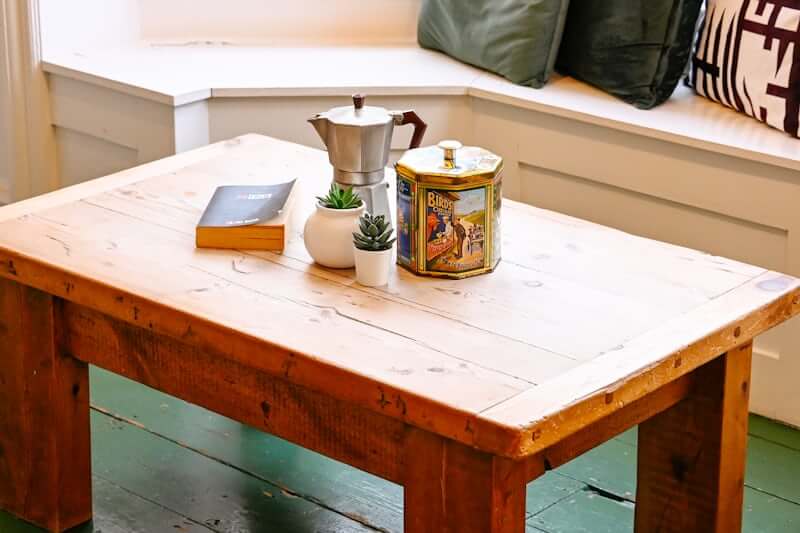
Reading a list of techniques and applying them are two different skills, and the gap between them closes fastest with a small, repeatable exercise. Try this with any single shelf, table, or console in your home:
- Step 1: Clear the surface completely. Start from nothing so you’re not just shuffling an existing arrangement that may already be working against you.
- Step 2: Choose three objects, not five. Limiting yourself forces you to practice grouping and restraint at the same time, rather than filling space out of habit.
- Step 3: Vary the height before anything else. Place your tallest item first, then build the other two around it at two clearly different heights.
- Step 4: Step back and look from a normal viewing distance. Most styling mistakes are only visible from a few feet away, not while you’re standing directly in front of the surface.
Repeating this small exercise across a few different surfaces in your home is, in practice, a faster way to internalize these skills than reading every styling guide available. The goal is pattern recognition — once your eye starts catching an unbalanced grouping on its own, you’ve effectively learned the technique.
Why Learning These Techniques Is Worth Your Time
Beyond making a single room look better, learning interior styling techniques pays off in a few concrete ways:
- It saves money over time. Once you understand why a room feels unfinished, you stop buying random decor hoping something will fix it. Interior styling techniques fix the actual problem — grouping, scale, lighting — which is almost always free or nearly free.
- They work in any space, rented or owned. Because these techniques are about arrangement and proportion rather than permanent changes, they apply just as well in a studio apartment you can’t paint as they do in a house you own outright.
- They’re a transferable skill, not a one-time fix. Once you learn a technique — say, styling in odd numbers — you can apply it to every shelf, every room, every future move. This is the real advantage of learning interior styling techniques over simply copying a single styled photo.
In short: the goal isn’t to memorize 25 individual rules. It’s to internalize a smaller set of underlying habits that make almost any styling decision easier going forward.
The Three Ideas Behind Every Good Styling Technique
Before the list — nearly every effective styling technique traces back to one of three underlying ideas:
- Grouping — objects styled in twos, threes, or odd numbers read as intentional; single scattered items read as random
- Contrast — a room needs variation in height, texture, and tone, or it reads as flat no matter how nice each individual piece is
- Restraint — leaving visual breathing room matters as much as what you choose to add
Keep these three ideas in mind as you go through the list below — once you recognize them, you’ll start spotting them in every well-styled room you come across. Nearly all 25 interior styling techniques that follow are just specific applications of one of these three core ideas.
Styling Surfaces & Vignettes
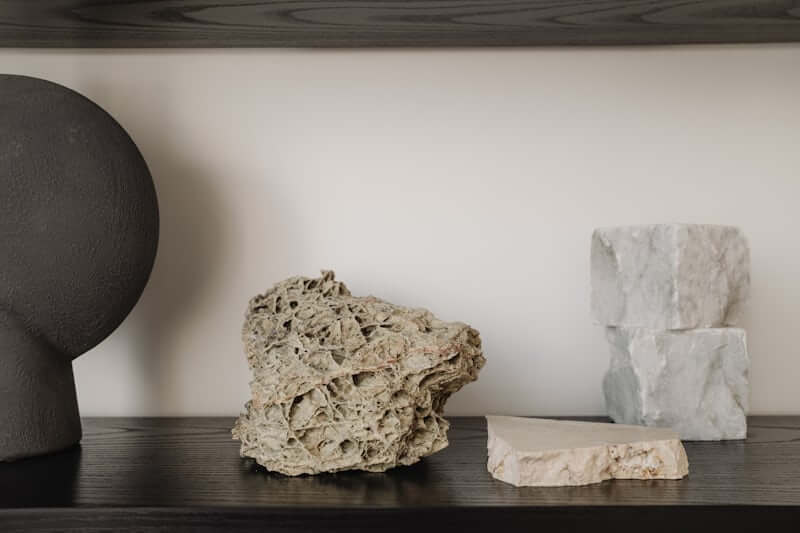
Coffee tables, shelves, and console tops are where most interior styling techniques get put into practice first — small surfaces are the easiest place to build a styled “vignette,” and the fastest place to see a technique actually work.
1. Style in Odd Numbers
Groupings of three objects almost always look more intentional than groupings of two or four. Odd numbers create a natural visual triangle that the eye finds more comfortable to look at, which is why it’s one of the most foundational interior styling techniques in any designer’s toolkit. If you only learn one technique from this entire guide, this is the one with the best return for the least effort.
2. Vary the Height Within Every Grouping
A candle, a small stack of books, and a vase at three different heights reads as styled. The same three objects at the same height reads as a row. Use a small riser, a coaster, or simply the books themselves to create variation.
3. Anchor a Vignette With One Larger Object
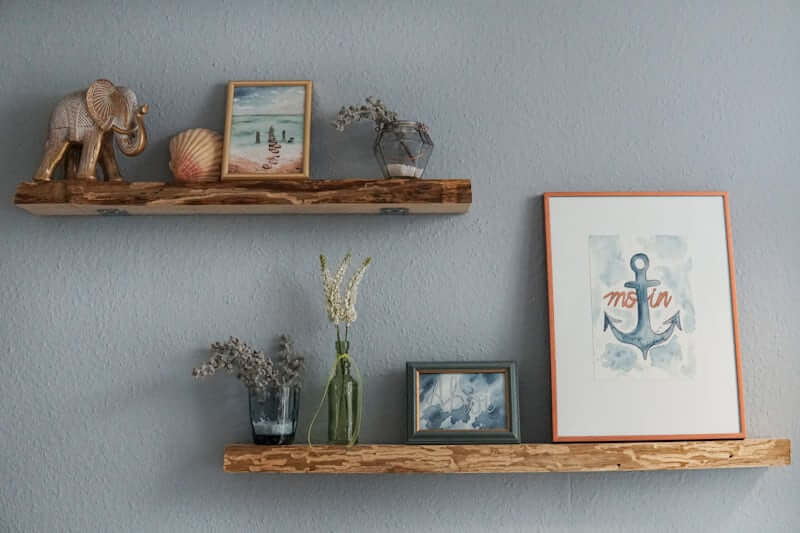
Every small styled grouping benefits from one piece that’s noticeably larger than the rest — a vase, a tray, a larger book. Without an anchor, several small items can look scattered rather than composed.
4. Use a Tray to Contain a Grouping
Placing a cluster of small objects on a tray visually “frames” them as one intentional grouping rather than several unrelated items sitting on a surface. This is one of the simplest techniques to apply immediately, on almost any surface in the house.
5. Leave at Least One Surface Mostly Empty
Not every surface needs styling. A bedside table with just a lamp, or a console with just one object, gives the eye a place to rest and makes the styled surfaces nearby stand out more by comparison.
Working With Color & Texture
Color and texture do more quiet work in a room than most people give them credit for — these interior styling techniques focus on using both with more intention.
6. Repeat One Accent Color at Least Three Times
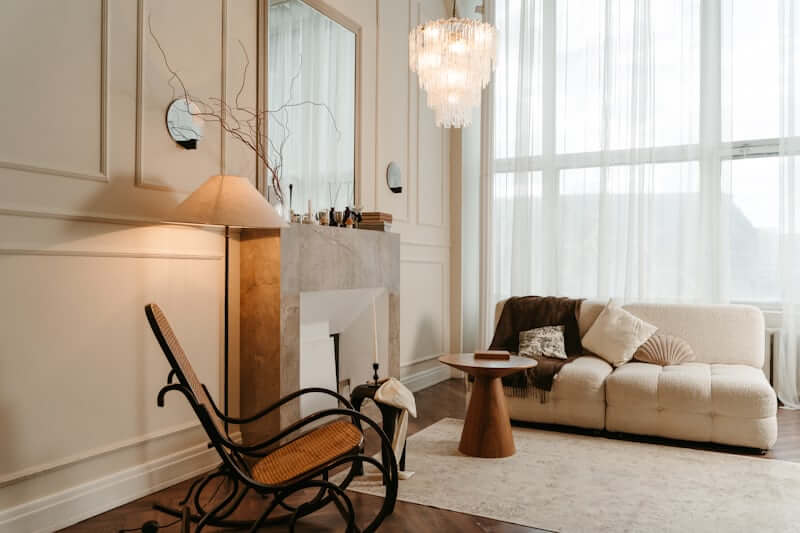
A single accent color — in a pillow, a piece of art, a vase — reads as a coincidence if it only appears once. Repeated three times across a room, it reads as a deliberate styling choice. The repetitions don’t need to match exactly; a deep green pillow, a sage-toned vase, and a botanical print all count as the same accent color working together, even at slightly different shades.
7. Mix at Least Three Textures in Any Seating Area
A smooth sofa, a knit throw, and a woven basket together feel more layered and inviting than three pieces in the same fabric family. Texture variation is one of the fastest interior styling techniques to apply to a flat-feeling room, and it costs nothing if you’re simply rearranging items you already own.
8. Use the 60-30-10 Rule as a Starting Point
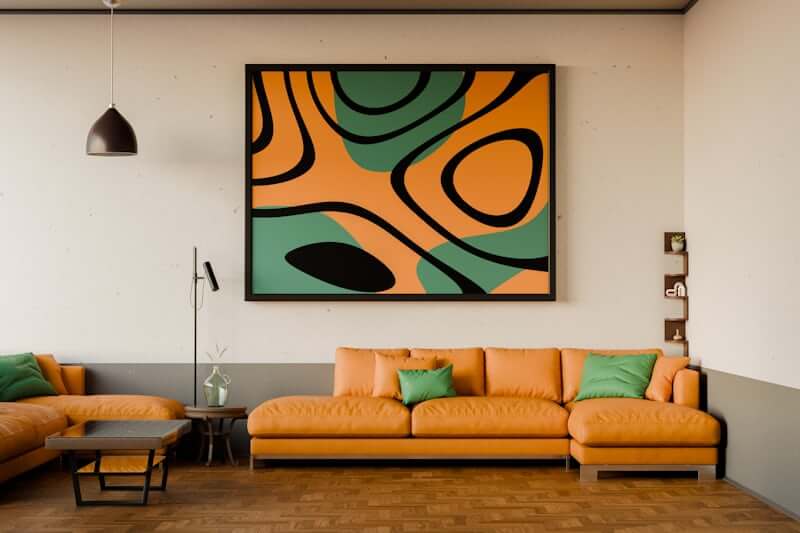
A dominant color at roughly 60% of the room, a secondary color at 30%, and an accent color at 10% gives a space cohesion without feeling matchy. It’s a guideline how the 60-30-10 color rule works, not a strict formula, but it’s a useful default when a room’s palette feels unbalanced.
9. Let Natural Materials Do Double Duty
Wood, rattan, linen, and stone all carry their own texture and warmth, which means a single natural-material object often does more styling work than several flat, single-tone accessories. A single rattan basket, for instance, adds texture, warmth, and a natural color note all in one object — three jobs that might otherwise require three separate decorative pieces.
10. Test Paint and Fabric Swatches in the Room’s Actual Light
A color that looks perfect under store lighting can shift dramatically under your home’s natural or warm bulb lighting. Holding a swatch in the actual room, at the time of day you’ll see it most, prevents a lot of styling regret.
Scale, Proportion & Negative Space
These interior styling techniques deal with how objects relate to each other in size — one of the most overlooked reasons a room feels “off” without an obvious cause.
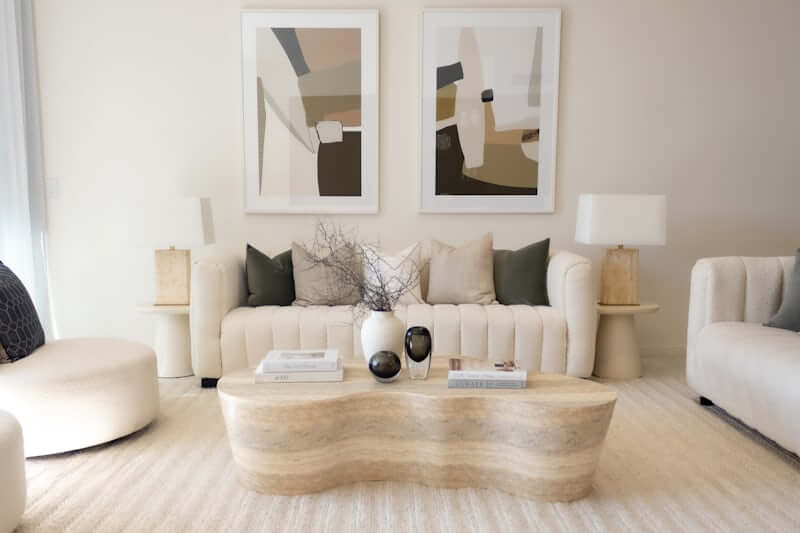
11. Match Art Size to Wall Size, Not Furniture Size
A small piece of art on a large blank wall can look lost, regardless of how nice the piece is. As a general guide, art should fill roughly two-thirds of the available wall space above a piece of furniture. If one large piece isn’t available, a gallery grouping of several smaller pieces, arranged tightly together, can achieve the same visual weight as a single oversized piece.
12. Let Negative Space Do Some of the Work
Not every wall needs art, and not every shelf needs to be full. Empty space around a styled object gives it room to be noticed rather than getting lost among other things competing for attention.
13. Scale Throw Pillows to the Seating Piece
Oversized pillows on a small loveseat, or undersized pillows on a deep sectional, both throw off a room’s proportions. Pillow size should feel proportional to the depth and width of the seat back behind them.
14. Choose a Rug Size Based on Furniture Placement, Not the Room

A rug should be large enough that at least the front legs of major furniture pieces sit on it. A rug that’s too small for the seating area is one of the most common scale mistakes people make.
15. Vary Furniture Height Across a Room
A room where every piece sits at roughly the same height — sofa, coffee table, side table all similar — can feel visually monotonous. Mixing in one taller element, like a floor lamp or tall plant, breaks up the horizon line.
Lighting as a Styling Tool
Lighting is often treated as purely functional, but these interior styling techniques treat it as a design element with as much influence as color or furniture.
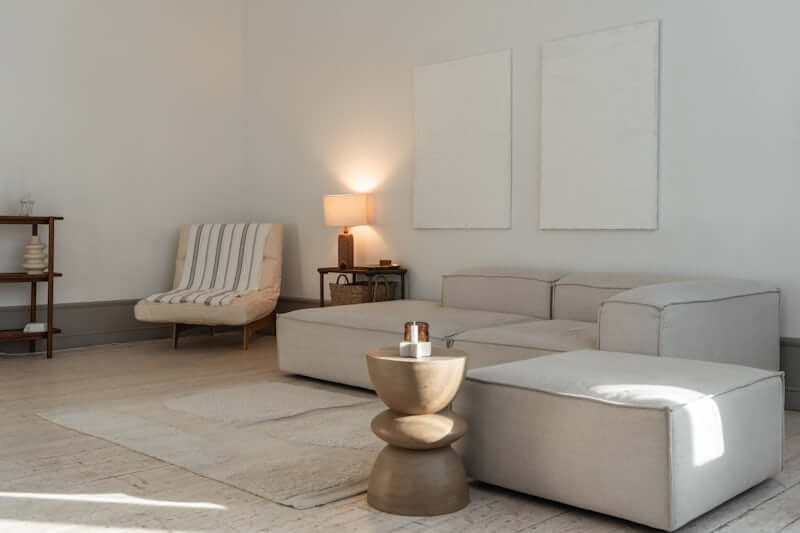
16. Layer at Least Three Light Sources Per Room
Overhead, task, and ambient lighting — think a ceiling fixture, a desk or reading lamp, and a softer accent light — together create the kind of layered glow that single-source lighting never achieves. Each source should ideally sit at a different height in the room, since light coming from only one elevation flattens shadows and makes the space feel less dimensional.
17. Use Lighting to Highlight, Not Just Illuminate
A small spotlight or uplight aimed at a plant, a piece of art, or an architectural detail draws attention to it after dark in a way flat, even lighting never does. This is one of the more advanced techniques on this list, but it’s also one of the most dramatic in terms of visible payoff.
18. Keep Bulb Temperature Consistent Throughout a Room
Mixing warm and cool bulbs within the same space creates a visually jarring, mismatched feeling, even if each individual lamp looks fine on its own. Sticking to one consistent Kelvin temperature throughout a room keeps the lighting feeling intentional.
19. Use Dimmers to Shift a Room’s Mood by Time of Day
The same room can serve a bright, functional purpose in the morning and a softer, more relaxed purpose in the evening, simply by adjusting brightness — no other styling change required. A basic plug-in dimmer switch, which requires no electrical work, can retrofit almost any existing lamp for under the cost of a single throw pillow.
20. Let Candlelight Do What Electric Light Can’t
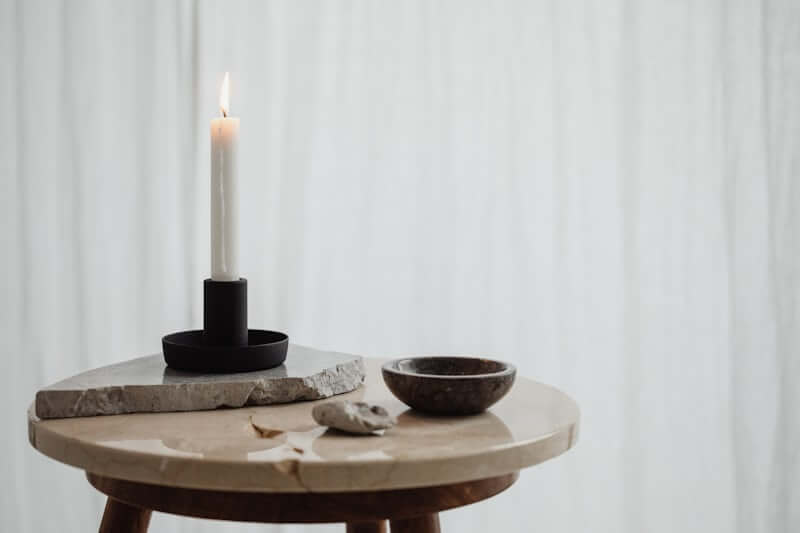
Flickering, warm candlelight adds a kind of movement and softness to a room that no bulb fully replicates. Even a small grouping of candles adds a layer of ambiance most lighting setups overlook entirely.
The Personal Layer
This last group of interior styling techniques is about what separates a styled room from a staged one — the personal details that make a space feel lived-in.
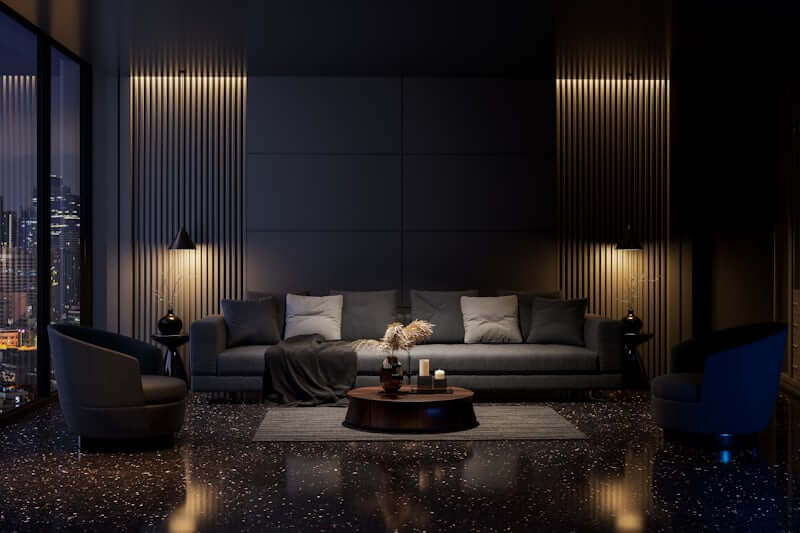
21. Display Items With a Story, Not Just a Look
A souvenir, a handmade gift, or an inherited object brings a layer of meaning that a purely decorative piece can’t replicate, even if the decorative piece is objectively more polished. Mixing one or two of these meaningful pieces into an otherwise styled grouping keeps the whole arrangement from feeling impersonal, without requiring you to sacrifice any of the other techniques on this list.
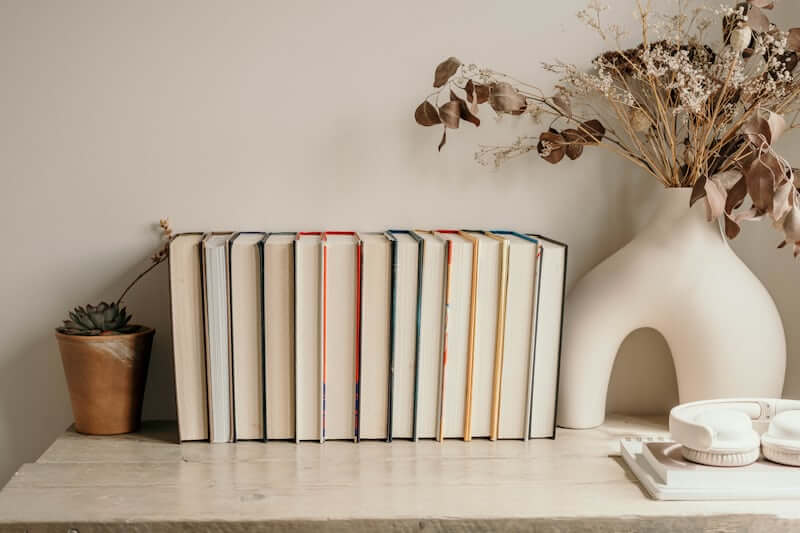
22. Let Books Be Functional Decor
Stacking books you’ve genuinely read, rather than buying decor books for their spine color, keeps a shelf or table feeling like it belongs to an actual person rather than a showroom display.
23. Rotate Decor Seasonally Instead of Buying More
Swapping a few accent pieces — a throw, a candle scent, a seasonal branch in a vase — keeps a room feeling fresh throughout the year without requiring a constant stream of new purchases.
24. Don’t Style Out Every Sign of Daily Life
A perfectly staged room with zero trace of how it’s actually used can feel a little cold. Leaving a blanket draped where you actually sit, or a mug on the table where you actually drink your coffee, keeps a styled room feeling real.
25. Style for How You Actually Live, Not How a Photo Would Look
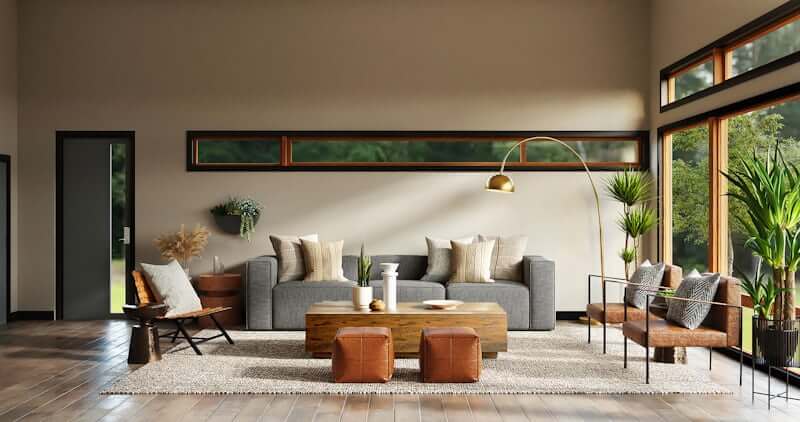
The most fundamental of all interior styling techniques, and the easiest one to forget: a room styled for a photograph and a room styled for your actual life aren’t always the same room. The goal isn’t a perfect photo — it’s a space that works for you and still feels good to come home to.
A slightly imperfect, well-loved room will always feel warmer than a flawless one nobody actually relaxes in.
Apply One Technique at a Time
You don’t need to apply all 25 interior styling techniques in one weekend. Pick one room and one principle — grouping in odd numbers, varying height, layering light — and see how much it changes before moving on to the next.
Which technique are you trying first? Tell us in the comments — we’d love to hear which one makes the biggest difference in your space.
Final Thoughts
Good interior styling techniques aren’t really about following rules — they’re about training your eye to notice grouping, contrast, and restraint until applying them becomes second nature. Start with the surfaces and lighting in just one room; they tend to show the fastest, most visible results.
Once these techniques start feeling automatic, you’ll find yourself making small adjustments without even thinking about it — nudging a vase, swapping a bulb, regrouping a shelf — the same way an experienced cook adjusts seasoning without measuring.
However your home is styled today, it can still feel like a warm hug at the end of the day — exactly as it is right now.
Interior Styling Techniques: Frequently Asked Questions
What are the most important interior styling techniques for beginners?
Grouping objects in odd numbers, varying height within a grouping, and layering at least three light sources are the three interior styling techniques that tend to make the fastest, most visible difference for someone just starting out.
Do I need a big budget to use these techniques?
No — most of these techniques are about arrangement, lighting, and color choices using items you likely already own.
How do I know if a room’s furniture scale is off?
If pieces feel either lost in too much space or cramped with no breathing room, scale is usually the underlying issue, not the furniture itself.
Why do designer rooms feel more put-together than mine?
Often it comes down to consistent grouping, varied height, and layered lighting — small habits more than any single expensive item.
Is it okay if my styled room doesn’t look like a magazine photo?
Yes — a room styled for how you actually live will always feel warmer than one styled purely for a photograph