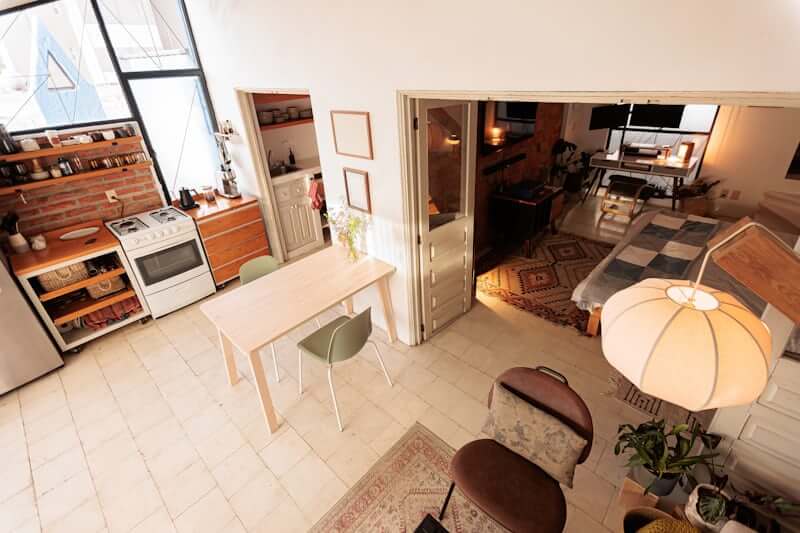
Small space apartment living comes with a learning curve that nobody really warns you about. It’s not just about fitting furniture into a smaller footprint — it’s about figuring out where everything actually goes, how one room can do the job of three, and how to keep the whole place feeling calm instead of cluttered.
If you’ve ever stood in the middle of a studio or one-bedroom wondering how anyone manages to make it work, you’re not alone. Small space apartment living isn’t about owning less — it’s about being more intentional with what you have and how you use it.
These 25 ideas go beyond decorating tricks. They’re built around the everyday realities of small space apartment living — zoning, storage, routines, and the small mental shifts that make a compact home feel less like a compromise and more like yours.
Explore More Cozy Inspiration: Home Styling Tips | DIY Home Decor
Table of Contents
What Makes Small Space Apartment Living Actually Work
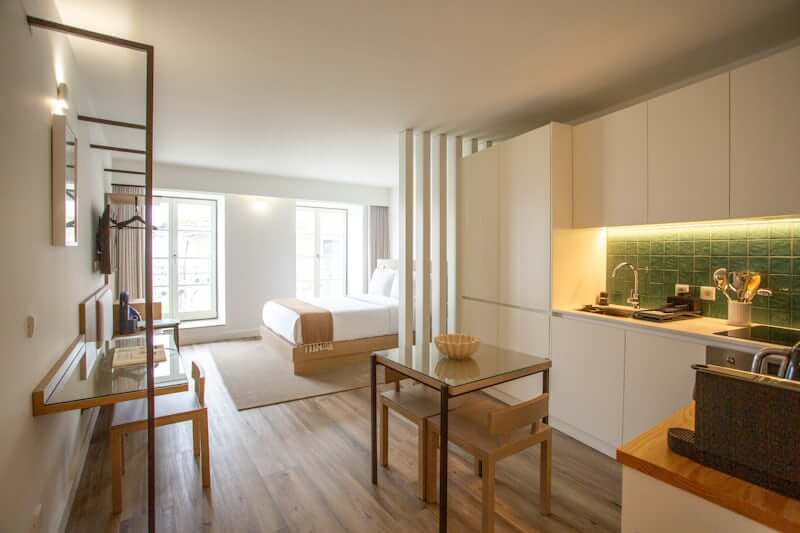
Before the list — the apartments that feel the most livable, regardless of square footage, tend to share three habits. None of them depend on how many square feet you’re working with, which is exactly why they matter more than almost any single purchase you could make:
Defined zones — even in one room, each area has a clear job, instead of everything blending into everything else
Designated homes for things — every item has one specific spot, so nothing accumulates on counters or floors
Daily reset habits — small, consistent routines that prevent clutter from building up faster than a small space can absorb it
These three habits show up again and again throughout this list — they matter more to small space apartment living than any single piece of furniture or storage bin.
Zoning One Room for Multiple Uses
One of the biggest shifts in small space apartment living is accepting that a single room might need to function as three or four different spaces — and that’s completely workable with the right zoning.
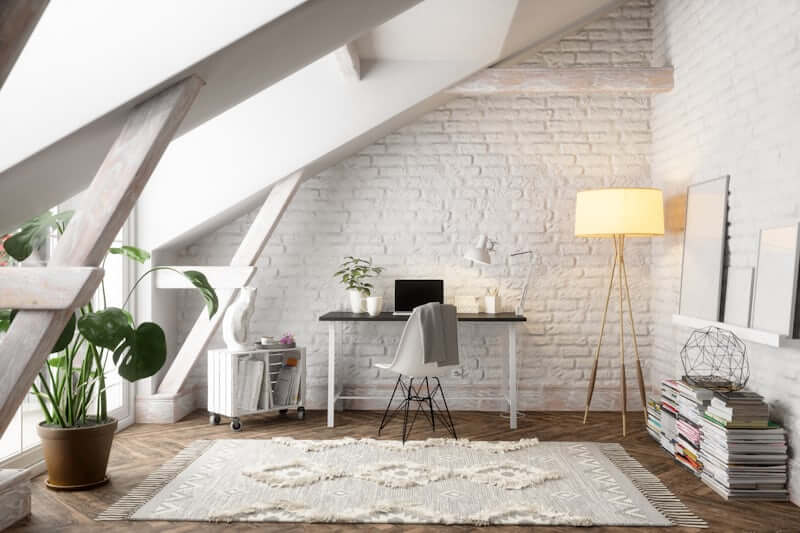
1. Use a Rug to Define a Zone Without Walls
A rug placed under a desk and chair, or under a small seating area, visually separates that zone from the rest of an open studio without needing an actual divider. Your eye reads the rug’s edge as a boundary, even in a completely open floor plan. Choose a rug sized to fit just the furniture grouping it’s defining, rather than one that floats in the middle of open floor — a too-small rug under just a chair reads as accidental, while one sized to the full seating area reads as an intentional zone.
2. Let a Bookshelf Double as a Room Divider
A tall, open-backed bookshelf placed perpendicular to a wall can separate a sleeping area from a living area in a studio. Keeping the back partially open, rather than solid, lets light pass through so the divided space doesn’t feel cut off. Position books and decor to face both directions if possible, so each side of the divider still feels finished rather than like the “back” of a piece of furniture.
3. Give Your Workspace a Closing Ritual, Not Just a Desk
In small space apartment living, a desk often sits inside a bedroom or living area rather than its own room. Closing a laptop, clearing the surface, and even draping a small cloth over a desk at the end of the workday creates a mental boundary between “work zone” and “rest zone,” even without a door to close.
4. Use Lighting to Signal a Zone Change
Switching from an overhead light to a single warm lamp when you move from your designated “work corner” to your “relaxing corner” helps your brain register the shift, even within the same physical room. This works because lighting is one of the strongest environmental cues we respond to — a brighter, cooler light keeps you alert and task-focused, while a dimmer, warmer light signals that it’s time to wind down, even if you haven’t physically moved more than a few feet.
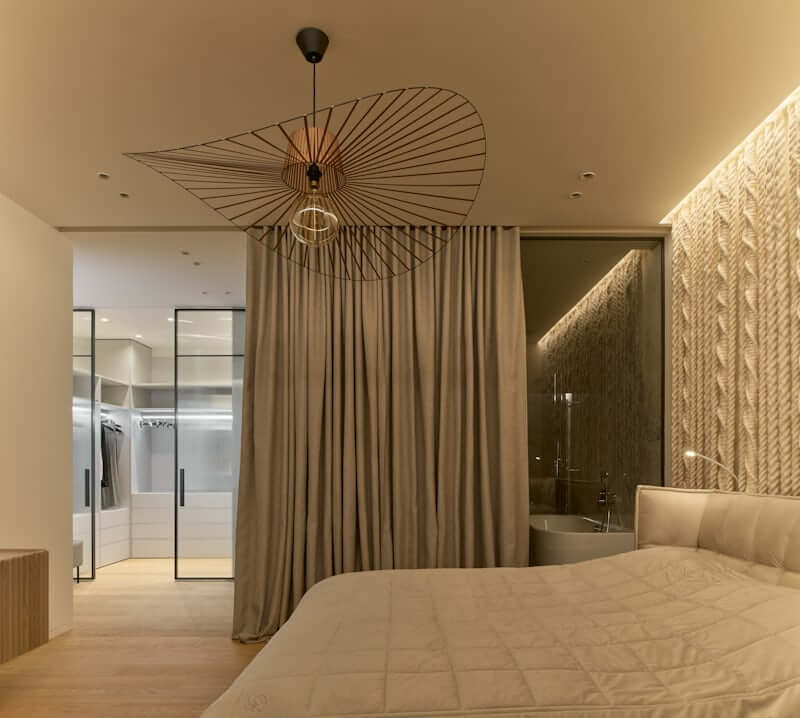
5. Try a Curtain or Sliding Panel as a Soft Divider
A ceiling-mounted curtain track or a simple tension rod with a curtain panel can section off a sleeping nook or closet area in a fraction of the cost of a real wall, and it can be pulled back fully open when you want the space to feel larger again.
Smart Storage for Compact Living
Storage is the backbone of small space apartment living — not because you need more of it, but because what you have needs to work harder.
6. Store Vertically Before You Store Wide
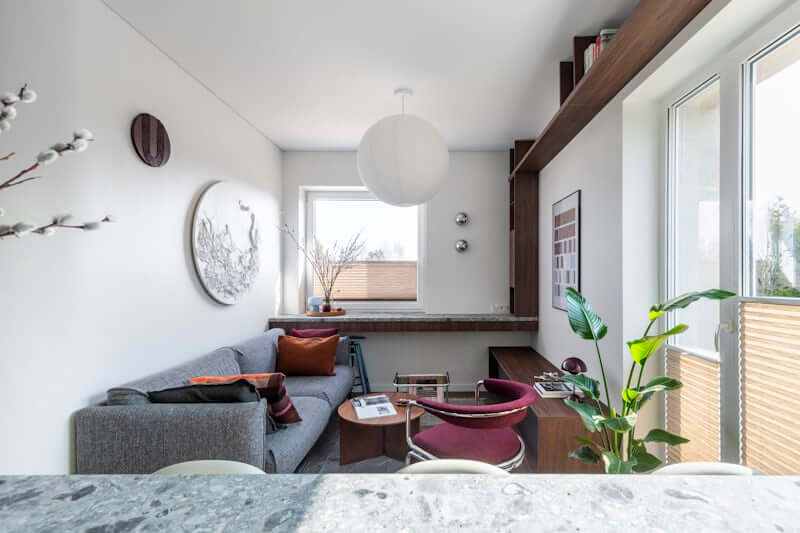
Wall-mounted shelves and over-the-door organizers use space that floor-standing furniture never touches. In small space apartment living, going up is almost always more efficient than going wide. Measure the wall space above existing furniture — a dresser, a desk, a sofa — before assuming there’s no room left for more storage; most apartments have several feet of unused vertical space above eye level.
7. Use Under-Bed Storage for Out-of-Season Items
Flat storage bins or a bed frame with built-in drawers can hold off-season clothing, extra linens, or rarely used items without taking up a single inch of visible floor or closet space. This is the best under-bed storage solutions.
8. Keep One Drawer for True Catch-All Items
Even the most organized small space apartment living setup needs one drawer for mail, chargers, and miscellaneous small items. The goal isn’t avoiding clutter entirely — it’s containing it to one spot instead of letting it spread across every surface.
9. Use Clear Bins in Closets So You Can See What You Own
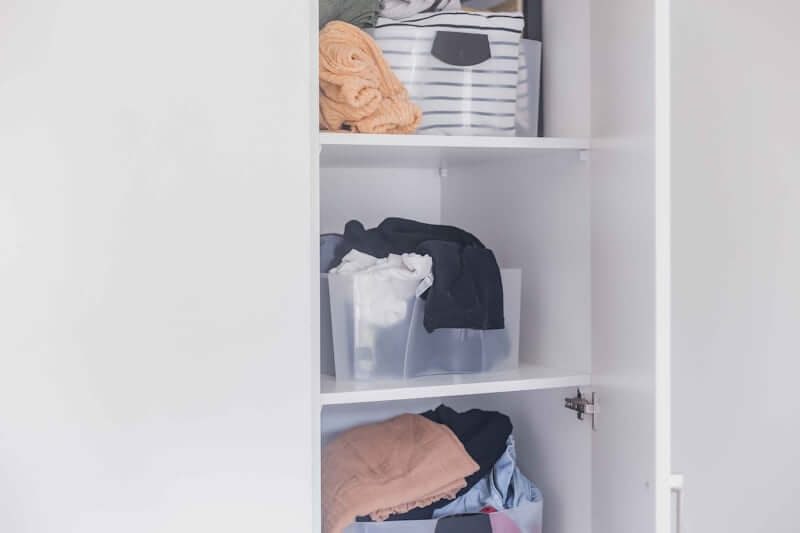
In a small closet, opaque bins often lead to forgotten or duplicate purchases simply because you can’t see what’s inside. Clear bins, or at least labeled ones, make a small storage space far more functional.
10. Hang a Pot Rack or Use Wall-Mounted Kitchen Storage
A small kitchen rarely has spare cabinet space, but walls almost always do. A hanging pot rack or magnetic knife strip frees up drawer space for items that don’t have another home, which matters in a kitchen with limited storage to begin with.
Daily Habits That Keep a Small Apartment Calm
Small space apartment living depends on routines just as much as it depends on furniture or storage — a few consistent habits keep a compact space from feeling like it’s closing in.
11. Do a Five-Minute Reset Before Bed
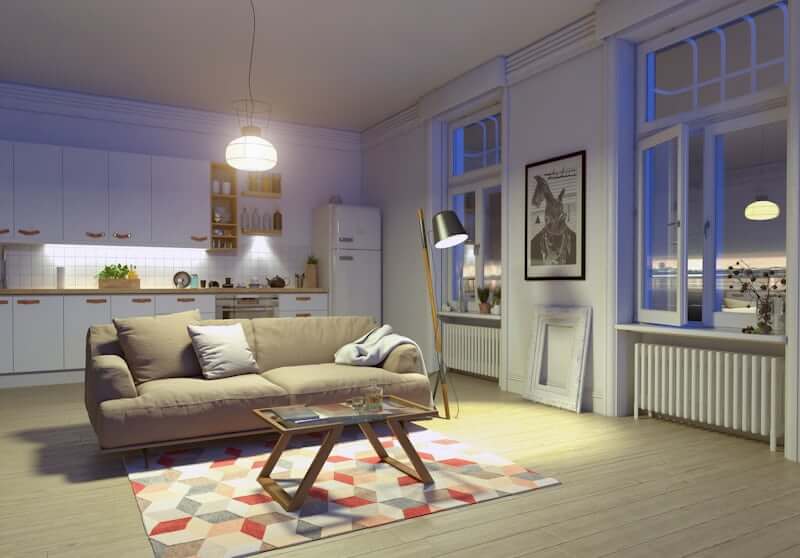
Putting dishes away, fluffing pillows, and clearing the coffee table for five minutes each night keeps a small apartment from accumulating the kind of clutter that feels overwhelming by the weekend. Set a timer if it helps — the goal isn’t a deep clean, just enough of a reset that you wake up to a space that already feels calm rather than one that greets you with yesterday’s mess.
12. Deal With Mail and Packages the Day They Arrive
Mail and delivery boxes are one of the fastest sources of clutter in small space apartment living, simply because there’s no spare room to let them pile up unnoticed. A quick daily sort prevents a stack from ever forming.
13. Do One Load of Laundry Instead of Waiting for a Full Hamper
In a small apartment, a full hamper often means clothes spilling onto the floor or a chair. Smaller, more frequent laundry loads keep that visual clutter from building up in a space that has nowhere to hide it.
14. Return Items to Their Spot Immediately, Not Later
In a larger home, an item left out might go unnoticed for days. In small space apartment living, even a few out-of-place items become visible immediately. Building the habit of putting things back right away — not “in a minute” — keeps the whole space feeling settled.
15. Set a Weekly Time to Reassess What’s Out
Once a week, take two minutes to look around and notice what’s accumulated on counters or chairs. Small space apartment living doesn’t require daily deep cleaning, but a short weekly check catches clutter before it becomes a bigger weekend project.
Furniture That Works Harder in Small Spaces
In small space apartment living, furniture needs to earn its footprint by doing more than one job.
16. Choose a Dining Table That Can Shrink or Expand
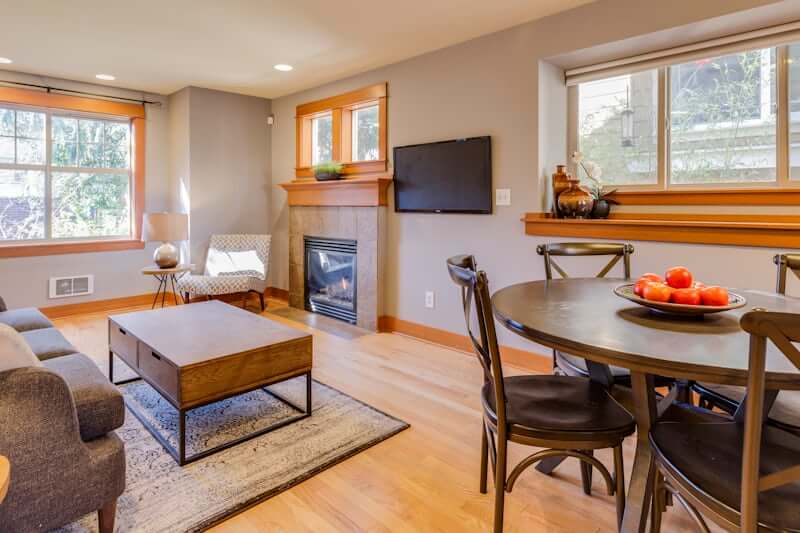
A drop-leaf or extendable table can sit small against a wall for everyday use and expand when guests come over — solving two very different needs with one piece of furniture instead of two. Measure your everyday walking path before buying, since the table’s expanded size, not its collapsed size, is what determines whether it’ll actually work for hosting.
17. Use a Daybed Instead of a Traditional Sofa and Bed
In a studio, a daybed can function as both a seating area during the day and a sleeping surface at night, which is especially useful for hosting overnight guests without dedicating space to a second bed.
18. Pick Nesting Tables Over One Large Coffee Table
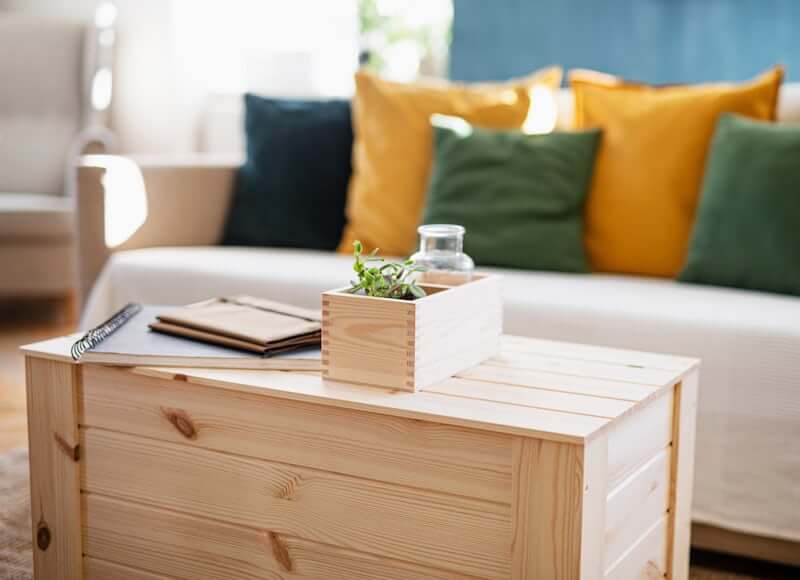
Nesting tables can separate for extra surface space when needed and tuck back together the rest of the time, taking up a fraction of the floor space a single large coffee table would require.
19. Use a Folding or Wall-Mounted Desk
A desk that folds flat against the wall when not in use frees up floor space for the rest of the day — particularly useful in small space apartment living where a home office and a living room often share the same square footage.
20. Choose a Storage Ottoman Over a Coffee Table and a Bin
An ottoman that opens for storage gives you a footrest, extra seating, and a place to hide blankets or remotes — three functions in the footprint of one piece of furniture, which matters in any room where every square foot is doing double duty.
Making a Small Apartment Feel Like Home
This last group of small space apartment living ideas is about the personal layer — the details that make a compact space feel like a home, not just a place you’re getting by in.
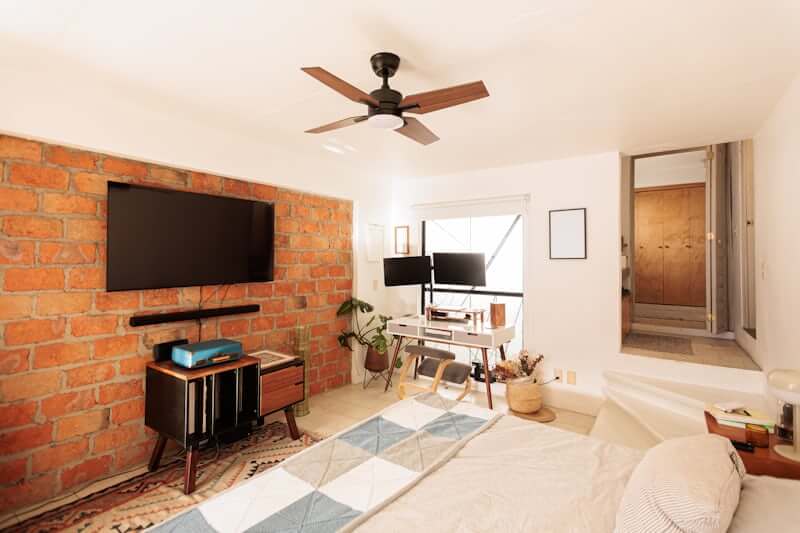
21. Personalize One Wall, Even in a Rental
Removable wallpaper, a gallery of photos, or a single piece of art on one wall gives even the smallest rental a sense of identity. It doesn’t need to be the whole apartment — one wall is often enough. Choose the wall you see most often, whether that’s behind your bed, across from your favorite chair, or facing the front door, since that’s where the personal touch will register every single day.
22. Keep a Few Sentimental Objects in View, Not Stored Away
In small space apartment living, it’s tempting to pack away everything that isn’t strictly functional. Leaving a few meaningful objects — a photo, a small souvenir — visible keeps the space feeling like yours, not just efficient.
23. Add a Plant Even If You Don’t Consider Yourself a Plant Person
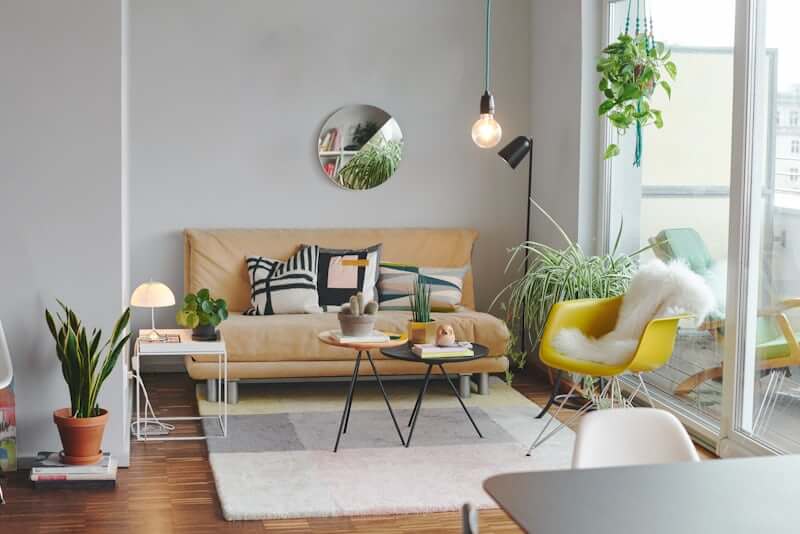
A single low-maintenance plant brings life into a small space without requiring much care or much room. It’s one of the simplest ways to make an apartment feel inhabited rather than just furnished. A pothos or snake plant tolerates inconsistent watering and lower light far better than most houseplants, making it a forgiving starting point if you’ve struggled to keep plants alive before.
24. Accept That “Small” and “Temporary” Don’t Have to Mean the Same Thing
Many people delay decorating a small apartment because they see it as a stepping stone rather than a real home. Treating your current space — however small or temporary — as worth caring for now tends to make the biggest difference in how it actually feels day to day.
A small apartment fully lived in almost always feels better than a larger one left half-finished while you wait for “someday.”
25. Mark the Apartment as Yours With Scent and Sound
A signature candle scent or a regular playlist you put on when you get home gives a small apartment a sensory identity that has nothing to do with square footage. These small, repeated cues are some of the fastest ways to make a space feel settled and yours, even if you’ve only lived there a short while.
Start With One Habit, Not a Full Overhaul
Small space apartment living improves through small, repeated habits more than any single big change. Pick one zoning idea or one daily habit from this list and try it for a week before adding another.
Which idea fits your space best? Tell us in the comments — we’d love to hear what’s worked for your apartment.
Final Thoughts
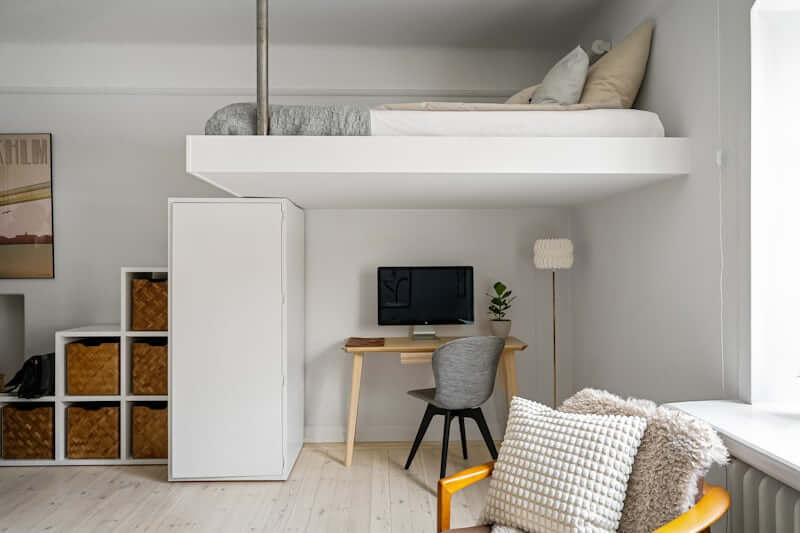
Small space apartment living isn’t about making do with less — it’s about being more intentional with zoning, storage, and daily habits than a larger home ever requires you to be. Start with one zone and one reset habit; together, they tend to make the fastest, most noticeable difference. The furniture and storage ideas on this list matter too, but they work best layered on top of habits that are already in place, not as a substitute for them.
However small your space, it can still feel like a warm hug at the end of the day — exactly as it is right now.
Small Space Apartment Living: Frequently Asked Questions
How do you zone one room for multiple uses in a small apartment?
Use a rug, a bookshelf, or a lighting change to visually separate areas — you don’t need walls to create a sense of zoning.
What’s the most important habit for small space apartment living?
A short daily reset — putting things back and clearing surfaces — prevents clutter from building up faster than a small space can absorb it.
Is vertical storage really better than floor storage in small apartments?
Yes — wall-mounted shelving uses space floor furniture never touches, which matters most in a compact apartment.
Can a studio apartment really have separate zones?
Yes — rugs, furniture placement, and lighting can all create the feeling of separate zones without any physical walls.
Should I decorate a small apartment if I plan to move soon?
Yes — treating your current space as worth caring for now tends to make it feel more like home, regardless of how long you’ll stay.