
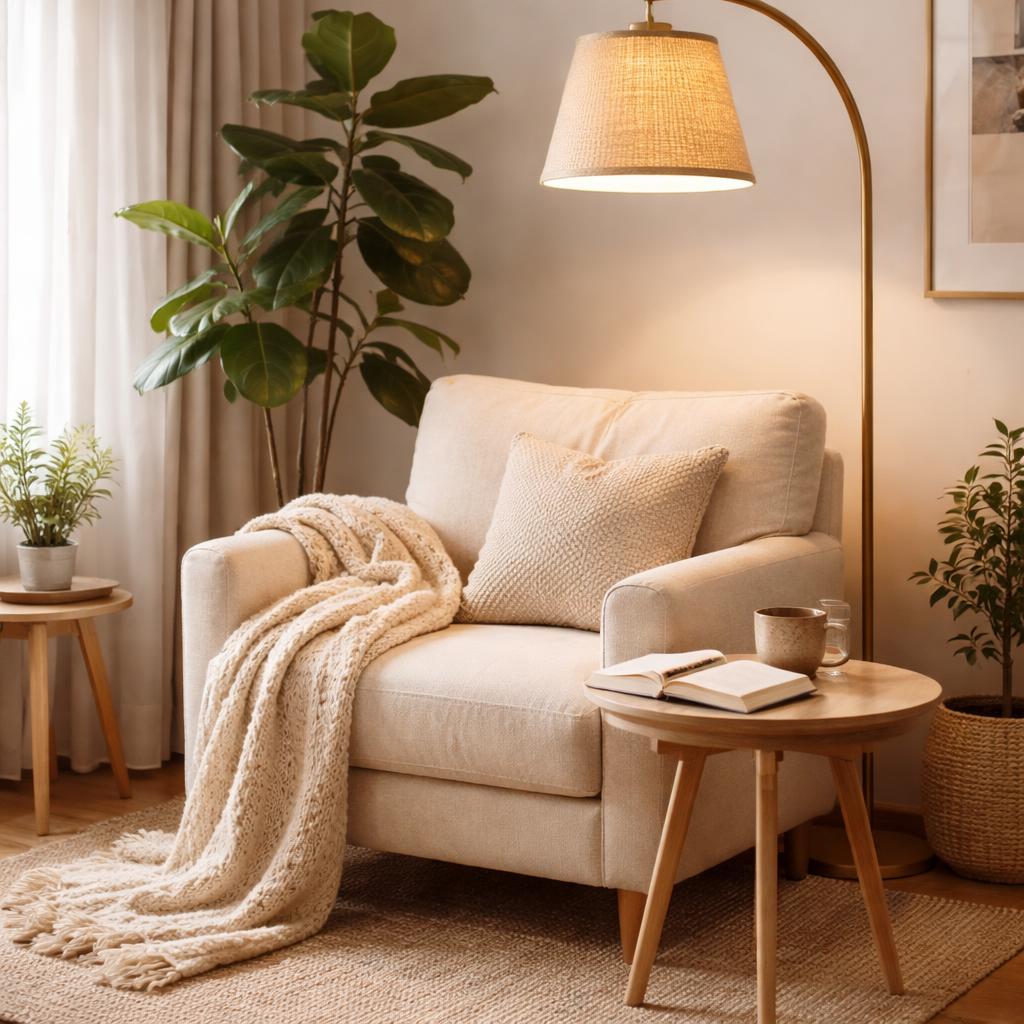
Empty corners can make a room feel incomplete. They interrupt the natural flow of a space and leave useful areas unused—something that is especially noticeable in small apartments or rental homes.
This guide focuses on practical solutions that transform unused corners into comfortable and functional spots. Instead of random decorations, the ideas here focus on purposeful design. You’ll find suggestions for seating, lighting, plants, storage, wall décor, and multifunctional setups.
Each idea highlights what problem it solves, who it works best for, important size considerations, renter-friendly notes, and quick advantages and disadvantages.
This guide is particularly helpful for renters who want stylish upgrades without damaging walls, people living in smaller spaces who need clear walkways, and anyone interested in creating a cozy reading corner without rearranging an entire room.
Comfort is the main goal. A cozy corner usually includes a supportive seat, a small surface for essentials, warm lighting, and soft textures—all while avoiding unnecessary clutter. Flexibility also matters, allowing the corner to adapt for seasonal décor or temporary uses.
The approach remains practical and budget-conscious. Instead of major renovations, the focus is on simple upgrades that are easy to reverse.
Key Takeaways
Unused corners can make a space appear unfinished, but a few simple changes can restore balance and functionality.
This guide explores several categories of corner décor, including seating, lighting, plants, storage, wall art, and multipurpose ideas. Each option explains who it suits, what measurements to consider, renter-friendly tips, and quick pros and cons.
A comfortable corner typically includes supportive seating, usable surfaces, warm lighting, and texture without adding clutter.
Flexibility is also important, allowing the space to adapt to seasonal décor or short-term needs.
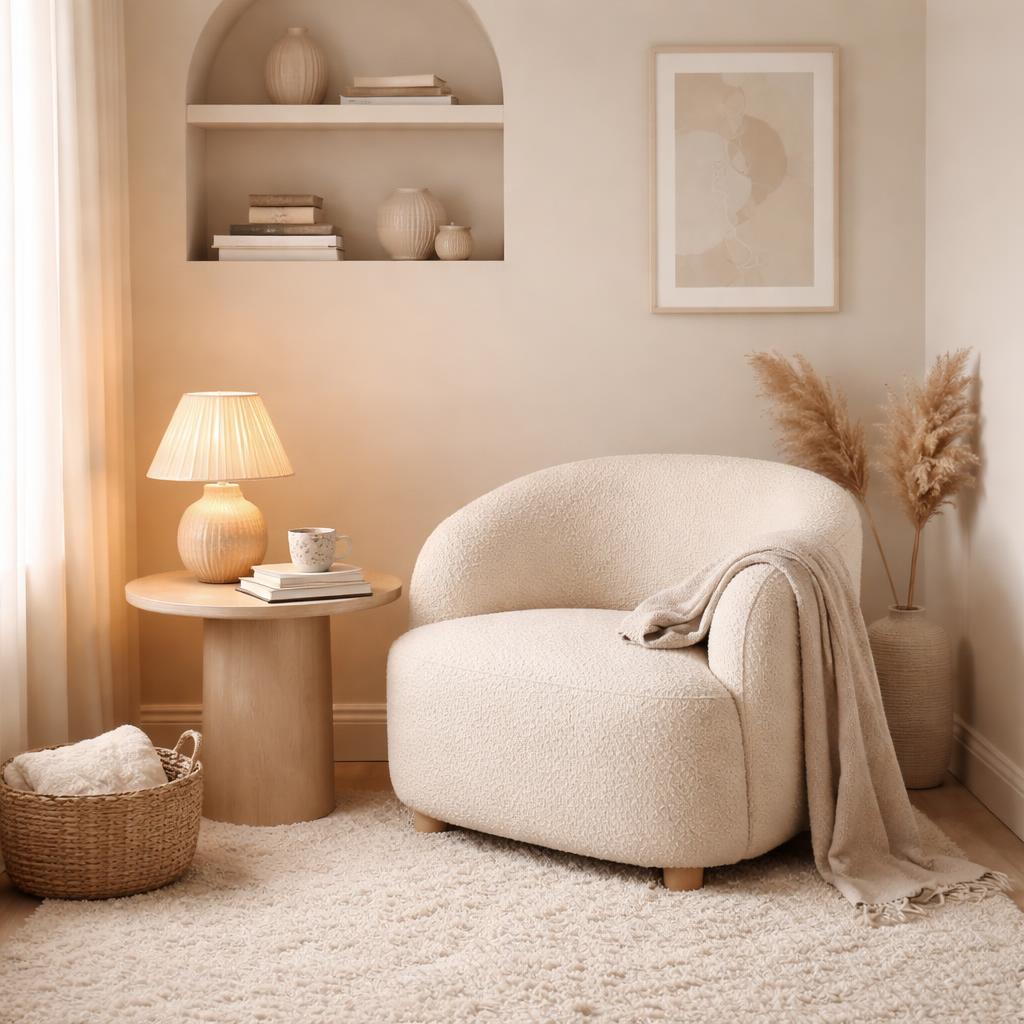
What makes a corner feel cozy (and not cluttered)
Empty corners can feel awkward until you decide how they should function. Without a clear plan, it’s easy to buy items that crowd the area instead of improving it.
Start with the problem
An unused corner often becomes a catch-all space where random items gather. This creates visual clutter and can interfere with walkways, particularly in smaller rooms.
Choose a primary purpose
Start by deciding the main function of the corner. It might become a reading nook, a storage area, or a place for ambient lighting. Choosing one purpose helps guide your furniture and décor choices.
Soften hard lines and manage visual weight
Corners often feel sharp and rigid. Curved furniture—such as round tables, baskets, and soft textiles—helps balance the space.
Light-looking furniture with open bases, slim legs, or glass surfaces can also provide functionality without making the corner appear bulky.
Color and texture play an important role as well. Rich tones paired with warm wood and layered fabrics can create a comfortable atmosphere without overwhelming the space.
Before purchasing new pieces, compare them based on function, size, and renter-friendly installation.
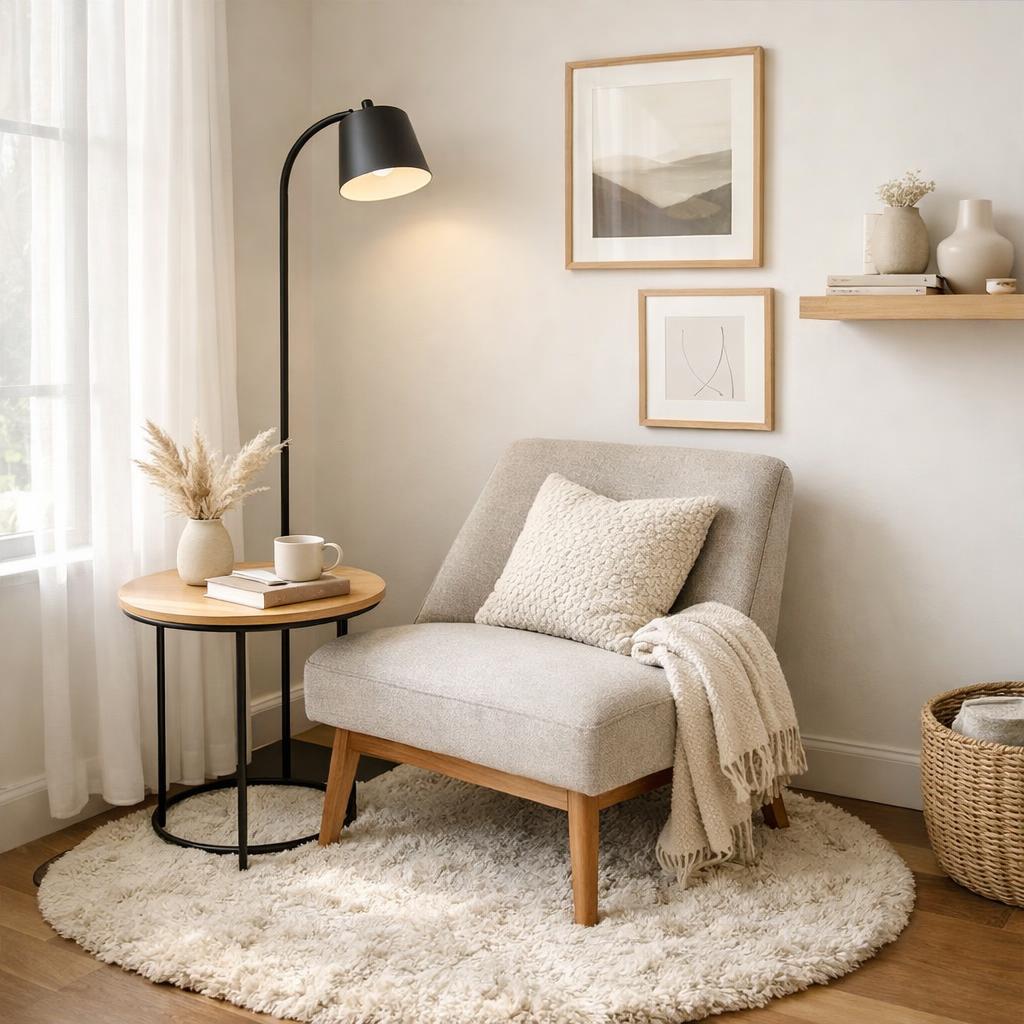
Measure your room and pick a layout that works in small spaces
Taking a few measurements can make choosing furniture much easier and prevent items from feeling too large once placed in the room.
Quick measuring checklist
Measure the width of both walls that meet at the corner.
Check the distance to nearby doors and walking paths.
Note the available depth from the corner into the room.
Minimum clearances to consider
A chair should have enough room to pull out comfortably while leaving walking space.
Side tables should be within easy reach of the seat while staying compact enough not to block movement.
For lighting, a slim floor lamp with a tall shade provides comfortable illumination without taking up unnecessary space.
Layout tips for a functional reading nook
Slightly angling the chair toward the room makes the corner feel welcoming rather than closed off.
Place small surfaces on the side that feels most natural to reach. In tighter spaces, vertical solutions—such as tall plants or narrow shelves—add storage without widening the footprint.
Pulling seating slightly away from the corner also prevents it from feeling cramped.
For renters, lightweight furniture that can easily move between rooms is usually the most practical choice.
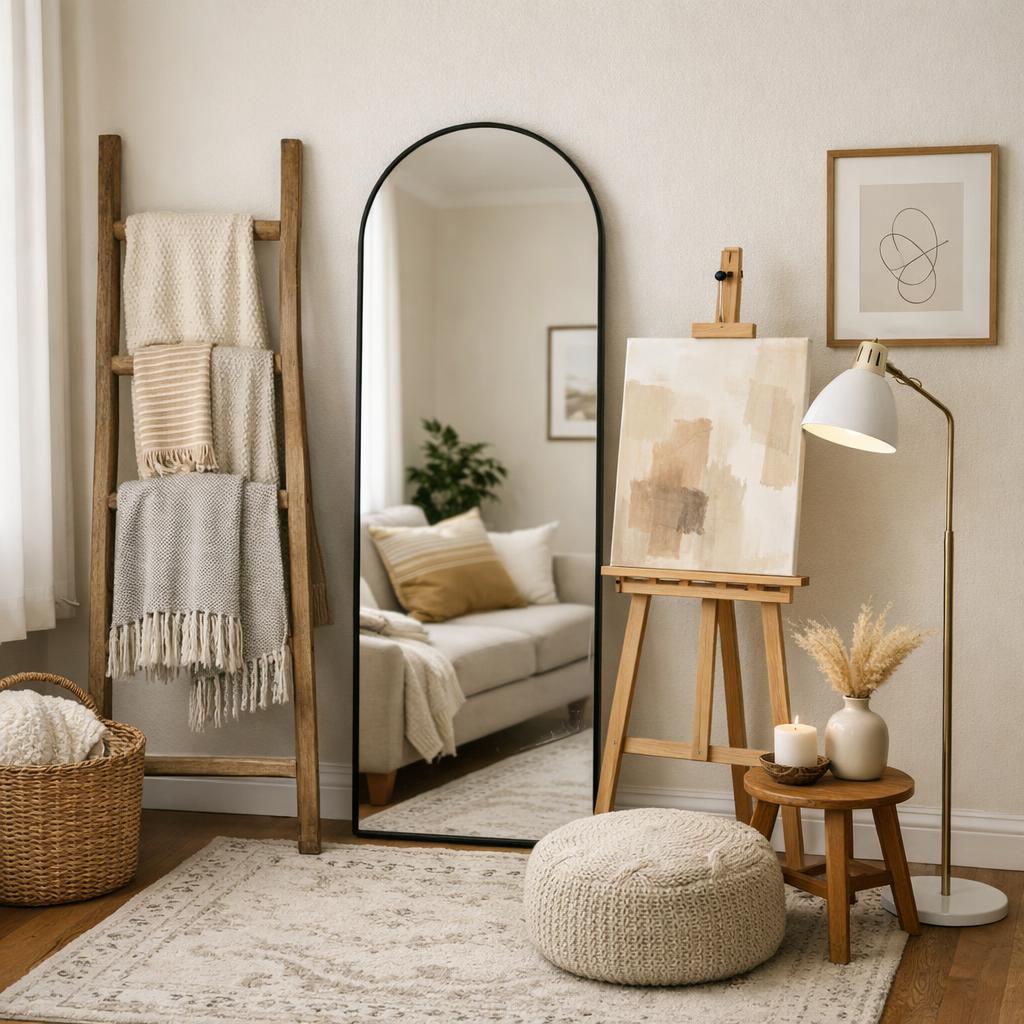
Renter-friendly cozy corner upgrades that won’t risk your security deposit
Many renters prefer décor solutions that don’t require drilling holes or making permanent changes. Fortunately, several options create a finished look without wall damage.
Lean-in pieces that look intentional
Items designed to lean against walls can add height and visual interest without installation.
Blanket ladders provide storage for throws while adding texture.
Floor mirrors reflect light and make a room appear larger.
Art easels allow you to display artwork or small décor pieces without mounting them.
Wireless lighting and removable wall solutions
Battery-powered wall sconces and portable lamps can provide warm lighting in areas without outlets. Removable hanging strips also allow artwork to be displayed without leaving permanent marks.
These solutions are easy to remove later, though they may require occasional battery replacement or charging.
A simple combination of a mirror, lamp, and art display can turn a blank corner into a finished focal point.
Best cozy corner decor that instantly adds seating
Adding seating is one of the quickest ways to make an unused corner functional. Even a single chair can transform an empty spot into a comfortable area for reading or relaxing.
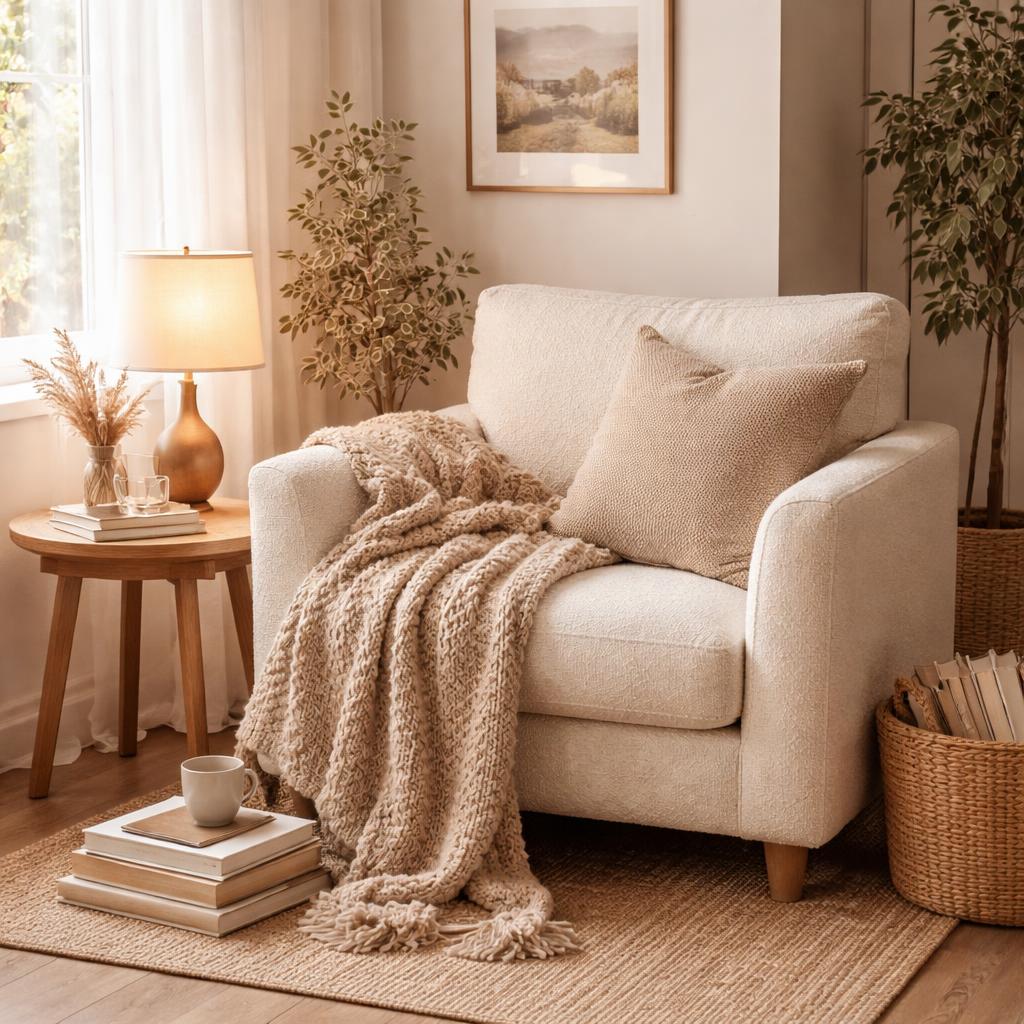
Cozy accent chair corners for reading and extra guests
Accent chairs work well for readers and for homes that occasionally need extra seating. When selecting a chair, consider seat depth, back support, and upholstery durability.
These chairs can double as decorative statement pieces while still providing practical seating.
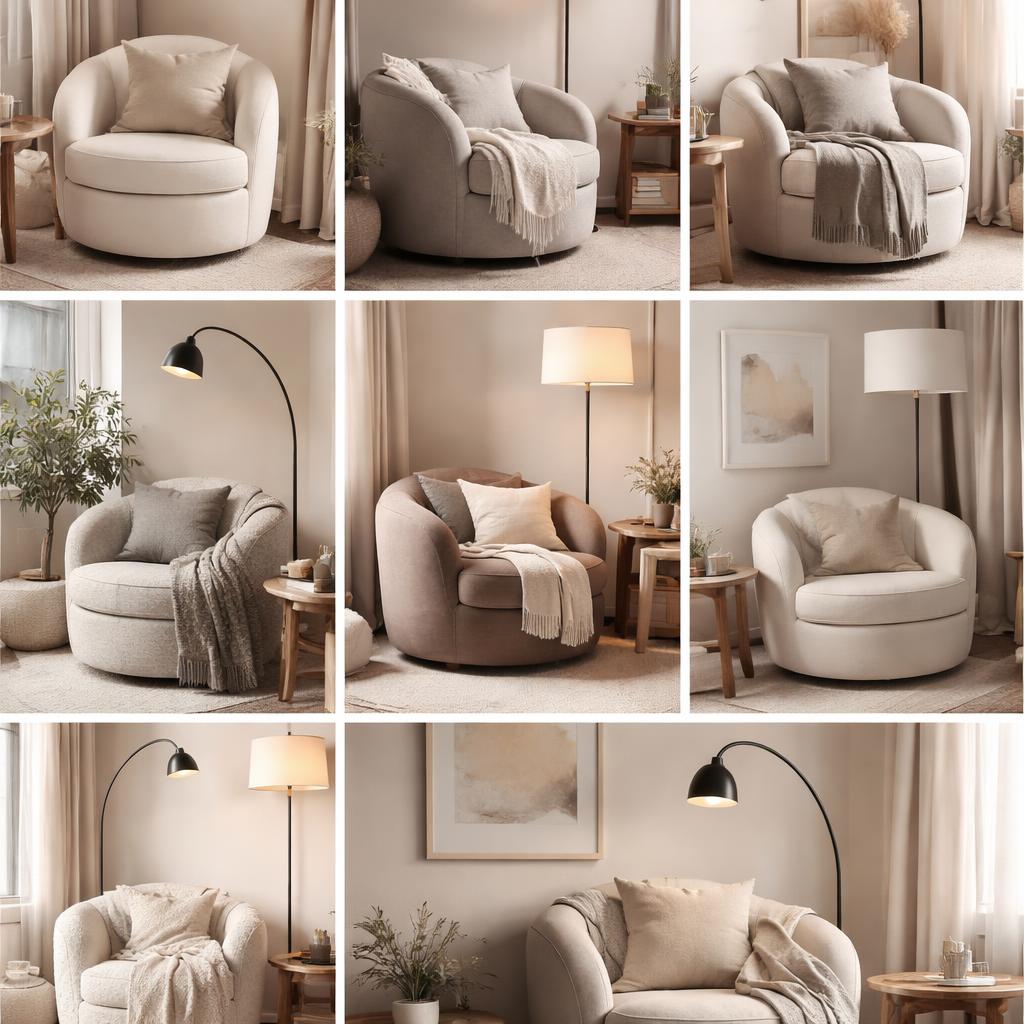
Swivel chairs for flexible living room corners and bedroom nooks
Swivel chairs allow you to adjust your view easily, whether you are watching television, talking with others, or reading.
They are versatile but may require slightly more floor space because of the circular base.

Ottomans and poufs for seating and hidden storage
Ottomans and poufs are compact solutions for small homes. Many versions include internal storage, making them ideal for blankets, games, or magazines.
While they are convenient, they may not provide enough support for long reading sessions.
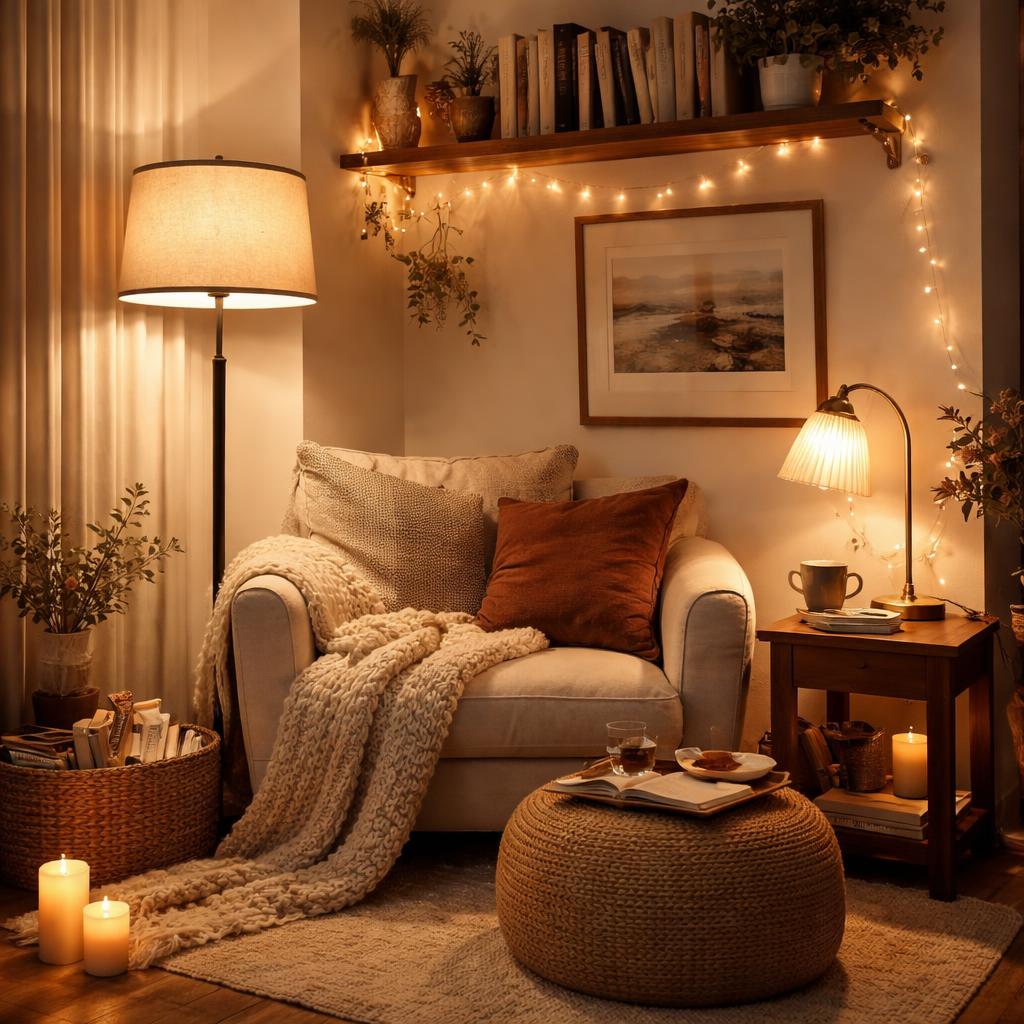
Layered lighting ideas for a warm, relaxing corner glow
Lighting can dramatically change how a corner feels. Instead of relying on a single overhead light, layered lighting creates warmth and depth.
A floor lamp can provide general illumination, while a reading lamp offers focused light for books or hobbies. Accent lighting, such as a small picture light, can highlight artwork or décor.
Slim floor lamps are especially useful because they provide light without occupying too much floor space.
Directional lighting can also draw attention to artwork or textured walls, helping the corner feel intentionally designed.
Wireless wall sconces are another renter-friendly solution, offering soft lighting without complicated installation.
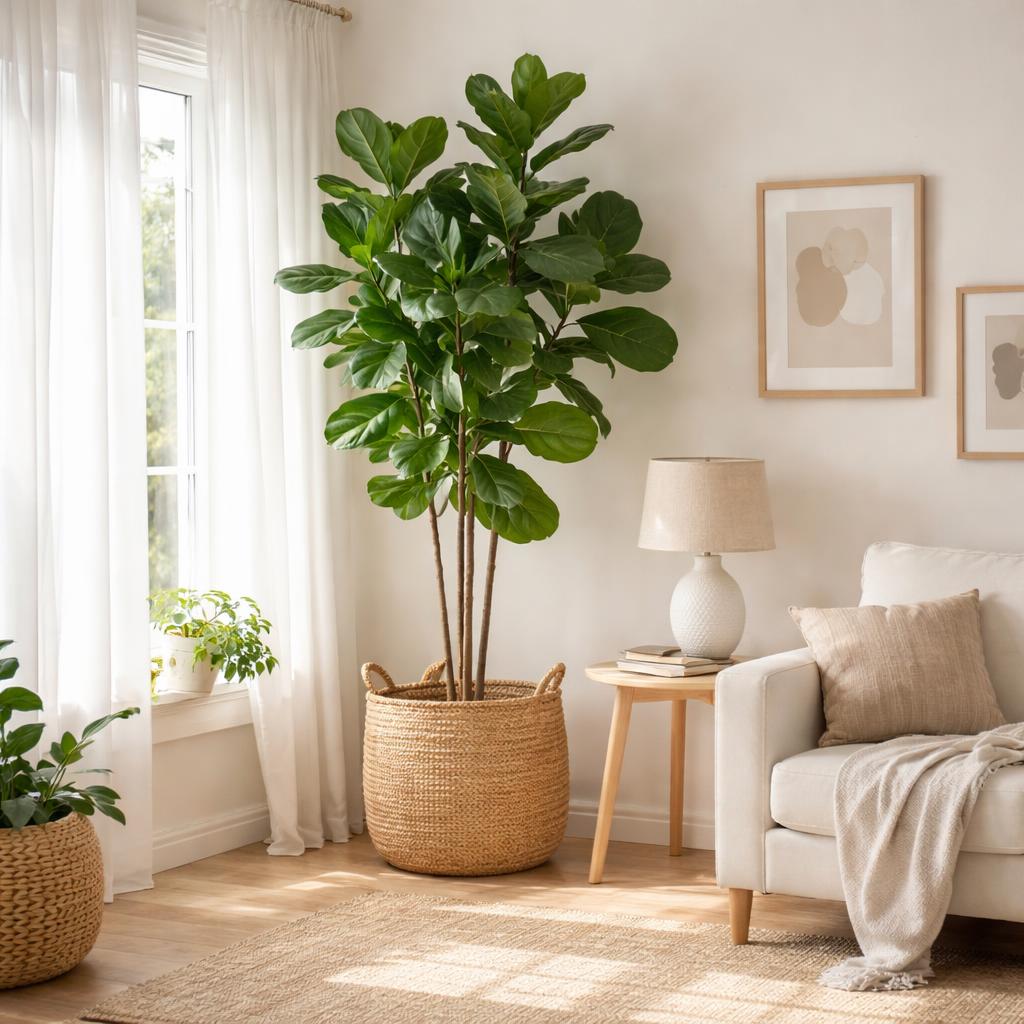
Use faux or real plants to fill empty corners without adding clutter
Plants are an easy way to bring life into an empty corner. A single tall plant can create a focal point without filling the area with many decorative items.
Faux fiddle-leaf figs and olive trees
Artificial plants provide year-round greenery without watering or sunlight requirements. They work especially well in rooms with limited natural light.
Using a decorative basket or planter can make them look more natural and intentional.
When faux plants work better than real ones
Artificial plants are useful when the space receives little sunlight or when regular maintenance isn’t practical.
Real plants can add natural beauty but require consistent care and proper lighting conditions.
Styling planters and hanging plants
Raising the plant slightly inside its planter can help the leaves sit at a more natural height. Textured planters or baskets also add warmth and style.
Hanging plants are a good option for tight layouts where floor space is limited.
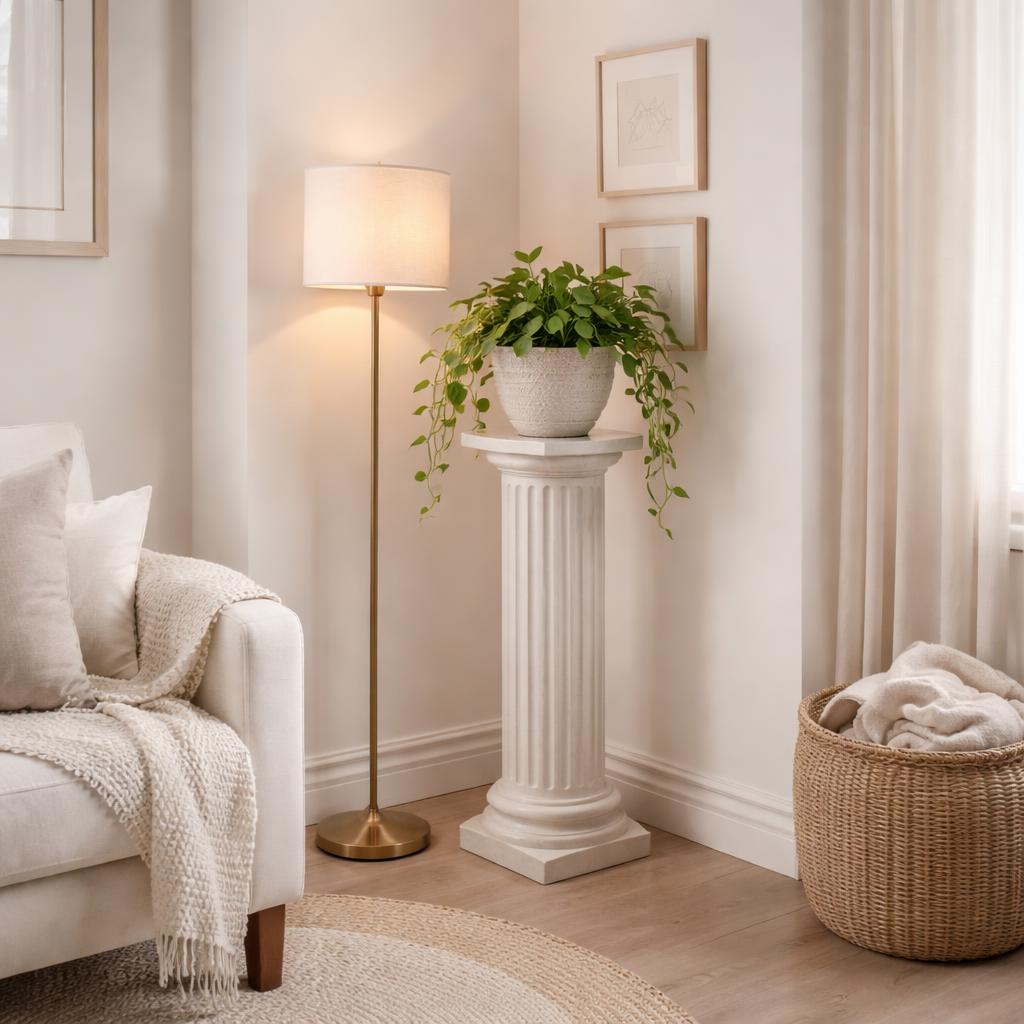
Pedestals and plant stands for narrow corners that need height
Tall pedestals or plant stands can make narrow corners feel more balanced by adding height without taking up much floor area.
Round pedestal tables often look lighter than square designs and can hold a small plant or decorative item.
Before purchasing, check the base width, tabletop size, and total height to ensure the stand fits comfortably in the space.
These pieces create visual impact with minimal footprint, although taller items may require careful placement for stability.
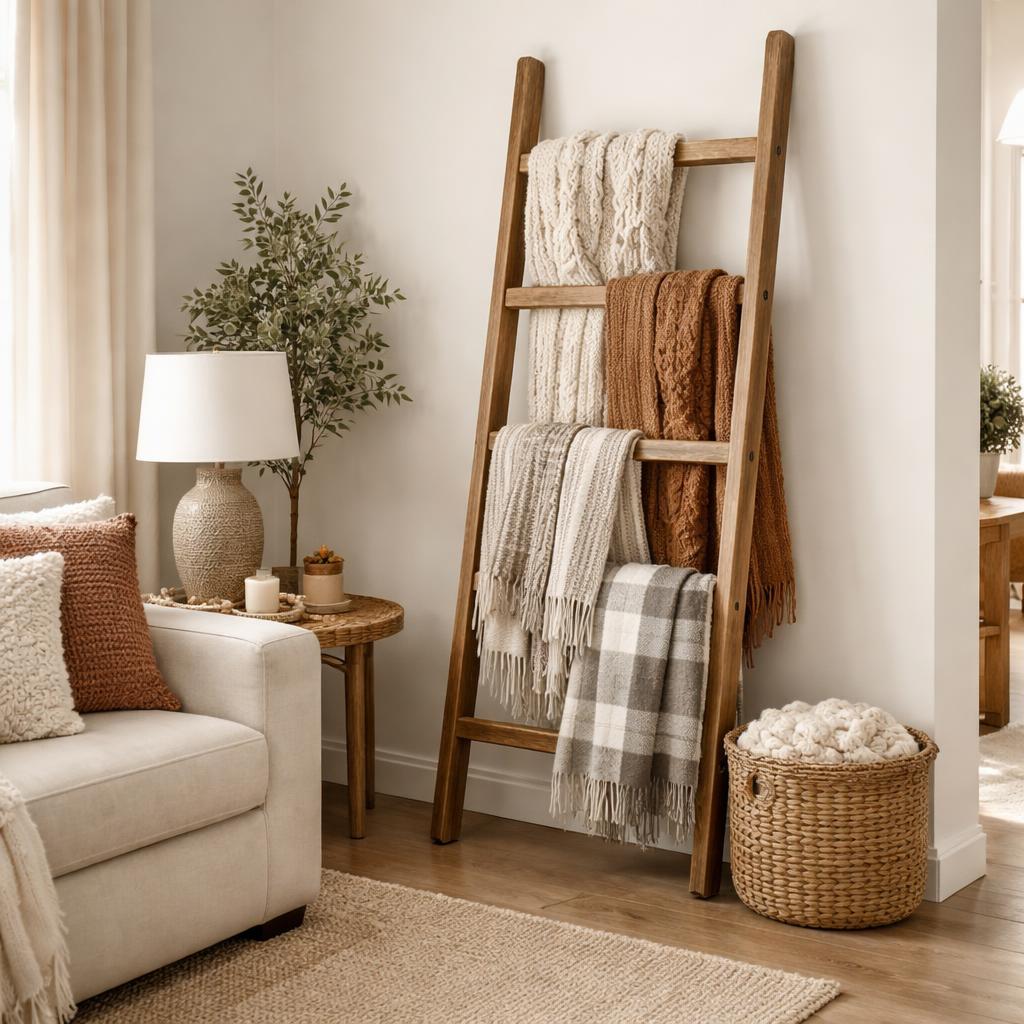
Decorative ladders that double as seasonal blanket storage
Decorative ladders provide vertical storage and texture while requiring no wall installation.
They are especially useful for holding blankets or throws near a reading chair. Because they lean against the wall, they can easily move between rooms.
To maintain a tidy appearance, limit the number of blankets to two or three and keep colors coordinated with the room.
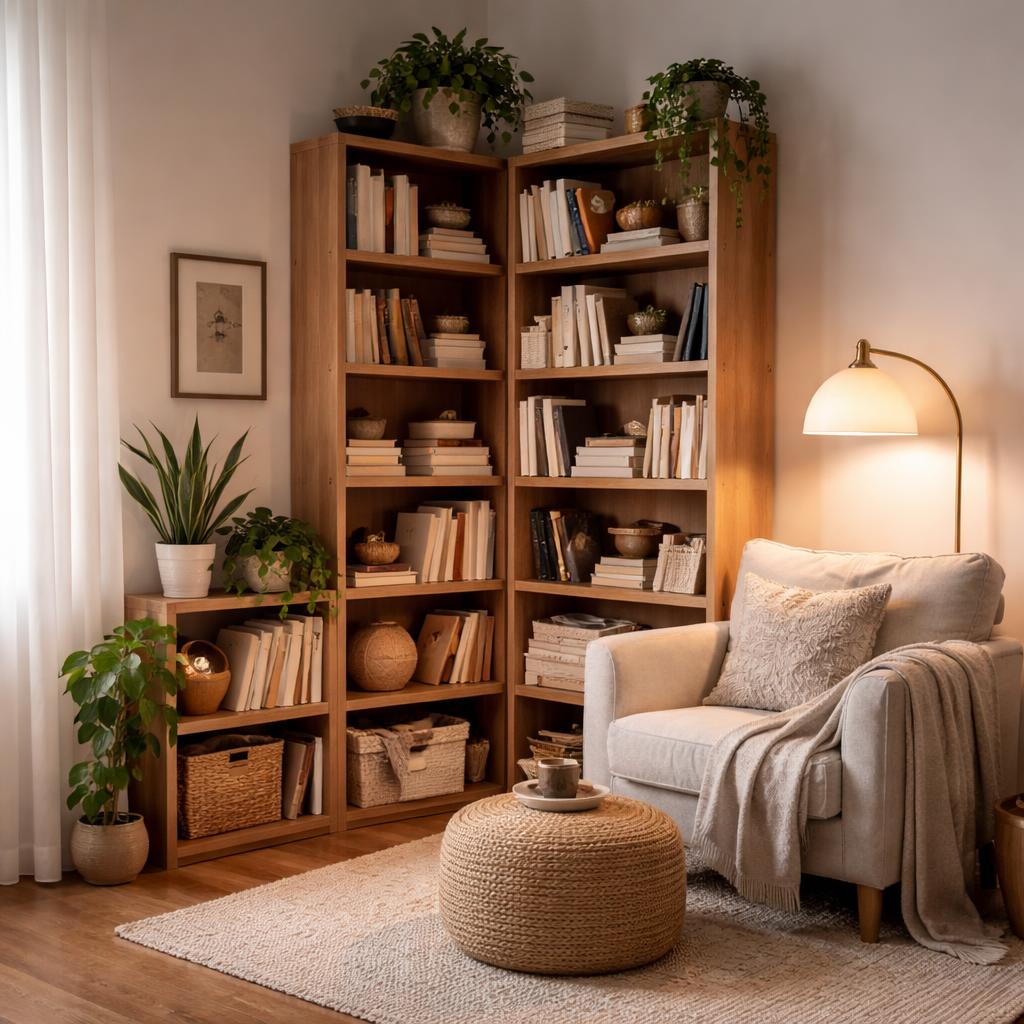
Bookshelves and ladder shelves for functional cozy corner storage
Vertical shelving is ideal for small spaces because it adds storage without expanding the room’s footprint.
Slim bookcases and ladder shelves can hold books, plants, framed photos, and seasonal décor.
Placing heavier items on lower shelves and lighter decorative items above helps create a balanced look.
Corner cabinets and sideboards to hide mess fast
Closed storage solutions help keep corners looking tidy by hiding everyday items.
Corner cabinets or compact sideboards can store toys, electronics, paperwork, or seasonal items. Designs with rattan doors or curved shapes add visual interest while maintaining a calm appearance.
To keep the top organized, limit décor to a few items such as a lamp, a plant, or a stack of books.
Baskets, texture, and soft goods to make a corner feel finished
Baskets provide both storage and decorative texture. They are ideal for holding blankets, pillows, or accessories.
Stacking two or three baskets can create layered storage while maintaining a tidy look.
Choosing baskets with lids can hide clutter, while fabric liners help reduce dust buildup.

Round accent and side tables that make a reading nook usable
A small side table can make a reading chair far more practical. It provides a place for a drink, a book, or a lamp.
Tables should be close in height to the chair’s armrest so items are easy to reach.
Round designs work particularly well in corners because they soften sharp angles and reduce the risk of bumping into corners.

Wall decor ideas that turn corner walls into a focal point
Wall décor helps integrate the corner with the rest of the room.
Gallery walls
A gallery wall with lightweight frames can create visual interest without taking up floor space. Planning the layout beforehand helps maintain balance.
Curated art sets
Matching art sets create a cohesive appearance and eliminate the challenge of mixing different frame styles.
Mirrors
Mirrors reflect light and can make a room appear larger. Placing one near a window or lamp increases brightness in the corner.
Architectural décor and easels
Decorative architectural pieces or art easels can add character without requiring permanent wall installation.

Multi-purpose corner setups for entertaining and everyday routines
A corner can also serve several functions with the right furniture choices.
Bar carts
A rolling bar cart can hold drinks during gatherings and display plants or décor at other times.
Coffee stations
A small coffee station creates a daily ritual area while freeing up kitchen counter space.
Compact desks
A narrow desk can provide a workspace while still keeping the room visually open when not in use.
Using movable furniture allows the corner to adapt for different needs throughout the year.
Buying guide and comparison criteria for affiliate product blocks
When comparing décor pieces, it helps to evaluate several practical factors.
- Best for small spaces: Look for compact dimensions, light visual weight, and furniture shapes that leave clear walking paths.
- Best for rentals: Choose pieces that don’t require permanent installation and can easily move when needed.
- Best for reading or relaxing: Prioritize comfortable seating, proper lighting height, and glare-free illumination.
- Best for low-light areas: Artificial plants, easy-clean materials, and stable planters work well in spaces with limited sunlight.
When evaluating any product, consider durability, assembly requirements, cleaning needs, and safety factors such as stability.
Creating a cozy corner doesn’t require major renovations. With thoughtful furniture choices, warm lighting, and a few carefully selected décor pieces, even the smallest corner can become a relaxing place to read, unwind, or enjoy quiet moments at home.